
Online Sarees Shopping in India – A Complete Guide
Online Sarees Shopping in India
Every region in India brings unique artistry to sarees from the grand Kanchipuram silks of Online Sarees Shopping in India
Tamil Nadu to the graceful Banarasi weaves of Uttar Pradesh. With the rise of e-commerce, online sarees shopping in India has transformed how women buy sarees – offering variety, convenience, and authenticity at their fingertips.
Online Sarees Shopping in India
Why Choose Online Sarees Shopping in India?
Online Sarees Shopping in India
- Endless Variety – Explore cotton, silk, chiffon, georgette, organza, and designer sarees in just a few clicks.
- Regional Sarees at One Place – Access Banarasi, Kanchipuram, Pochampally, Patola, Tussar, and more without travelling.
- Convenience – Shop anytime, anywhere with doorstep delivery across India.
- Affordable Pricing & Discounts – Compare prices, avail seasonal sales, and grab the best deals.
- Customization & Trendy Designs – Many platforms offer celebrity-inspired, fusion, and designer sarees tailored to modern fashion.
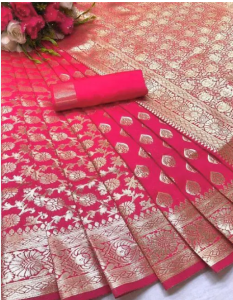
Famous Sarees You Can Buy Online in India
Online Sarees Shopping in India
- Kanchipuram Sarees (Tamil Nadu) – Rich silk with heavy zari borders.
- Pochampally Sarees (Telangana) – Known for unique Ikat weaving.
- Patola Sarees (Gujarat) – Double Ikat handwoven masterpieces.
- Chanderi & Maheshwari Sarees (Madhya Pradesh) – Light and elegant for festive and office wear.
- Tussar Silk Sarees (Bihar & Jharkhand) – Raw, textured silk with a natural golden sheen.
- Organza, Georgette & Net Sarees – Trendy, lightweight options for parties and weddings.
Online Sarees Shopping in India
Best Cities to Buy Sarees in India
1. Varanasi (Banarasi Sarees) :
- Famous for: Banarasi silk with zari, brocade, and intricate motifs.
- Perfect for: Brides and wedding wear.
- Why buy: Known for timeless luxury and rich handloom weaving.
2. Kanchipuram (Tamil Nadu) :
- Famous for: Kanchipuram silk sarees with gold borders.
- Perfect for: Weddings, festivals, and traditional occasions.
- Hyderabad & Pochampally (Telangana) :
- Famous for: Pochampally Ikat and Gadwal sarees.
- Perfect for: Festive wear and traditional gatherings.
- Why buy: Unique Ikat weaving technique with global recognition.
4. Kolkata (West Bengal) :
- Famous for: Baluchari, Tant, and Jamdani sarees.
- Perfect for: Everyday wear, pujas, and cultural occasions.
- Why buy: Lightweight, breathable, and artistic weaves.
5. Gujarat & Patan (Patola Sarees) :
- Famous for: Double Ikat Patola sarees.
- Perfect for: Special occasions and heirloom collections.
- Why buy: Extremely rare and intricately woven.
6. Madhya Pradesh (Chanderi & Maheshwari Sarees) :
- Famous for: Light, airy sarees with zari borders.
- Perfect for: Office wear and summer festivals.
- Why buy: Blend of elegance, comfort, and tradition.
7. Bhubaneswar & Cuttack (Odisha) :
- Famous for: Sambalpuri Ikat and Bomkai sarees.
- Perfect for: Cultural events and traditional ceremonies.
- Why buy: Strong handloom heritage with unique motifs
.
The Best Saree Company
1. Nalli Silks – The Heritage Brand :
- Established in 1928, Nalli is one of India’s oldest and most trusted saree companies.
- Famous for: Kanchipuram silk sarees, Banarasi silks, and traditional weaves.
- Why choose: Authenticity, heritage craftsmanship, and premium quality.
2. Kalanjali – Tradition Meets Style :
- Based in Hyderabad, Kalanjali is a popular saree company known for exclusive handlooms.
- Famous for: Pochampally Ikat, Gadwal, and Kalamkari sarees.
- Why choose: Curated handloom collections directly from artisans.
3. Mysore Silk Udyog :
- Known for luxurious Mysore silk sarees with intricate zari borders.
- Famous for: Pure Mysore silk and festive silk sarees.
- Why choose: Government-certified authentic silks.
4. Meena Bazaar – Fashion-Forward Sarees :
- A well-known saree brand with outlets across India.
- Famous for: Designer sarees, party wear, and modern drapes.
- Why choose: Trendy, affordable, and readily available.
5. Sabyasachi Sarees – The Designer Choice :
- Premium designer brand for luxury sarees.
- Famous for: Bridal sarees, organza silks, and handcrafted couture.
- Why choose: Exclusivity and high-fashion appeal.
6. Fabindia – Everyday Elegance :
- A go-to brand for casual and office wear sarees.
- Famous for: Cotton, linen, and handcrafted sarees.
- Why choose: Sustainable, eco-friendly, and comfortable collections.
7. Online Saree Platforms (Pan-India Reach) :
- Websites like Myntra, Flipkart, Amazon, and Ajio bring together thousands of saree brands.
- Famous for: Wide variety – from daily wear to bridal wear.
- Why choose: Affordable pricing, quick delivery, and return policies.
Top Fabrics for Sarees in India
1. Silk Sarees – Luxury & Tradition :
Famous Types: Kanchipuram, Banarasi, Mysore, Tussar, and Gadwal.
- Best For: Weddings, festive occasions, and bridal wear.
- Why Choose: Rich texture, durability, and timeless appeal.
2. Georgette Sarees – Modern & Stylish :
- Best For: Parties, evening wear, and casual outings.
- Why Choose: Lightweight, easy to drape, and flowy look.
3. Chiffon Sarees – Graceful & Feminine :
- Best For: Cocktail parties, receptions, and modern events.
- Why Choose: Soft, sheer, and gives a slimming effect.
4. Organza Sarees – Trendy & Chic :
- Best For: Fashion-forward looks and festive gatherings.
- Why Choose: Sheer fabric with crisp drape and statement designs.
5. Crepe Sarees – Sophisticated & Contemporary :
- Best For: Corporate events, formal gatherings.
- Why Choose: Wrinkle-free, smooth texture, elegant fall.
6. Linen Sarees – Minimal & Classy :
- Best For: Office wear, casual meetings, and summer styling.
- Why Choose: Eco-friendly, airy, and elegant.
Best Saree Materials
1. Silk Sarees – Royal and Timeless :
Silk is often considered the queen of fabrics, making it the top choice for weddings, festivals, and grand occasions. Famous varieties include Kanchipuram, Banarasi, Mysore Silk, and Paithani.
✔️ Best For: Brides, festive wear, traditional occasions
✔️ Why Choose Silk? Luxurious texture, rich zari borders, long-lasting heritage value.
2. Cotton Sarees – Comfortable and Classic :
Cotton sarees are the go-to fabric for daily wear and the summer season. Known for their breathability and comfort, they are available in handloom varieties like Khadi, Jamdani, Chanderi, and Kota Doria.
✔️ Best For: Office wear, casual outings, hot climates
✔️ Why Choose Cotton? Lightweight, easy to manage, and eco-friendly.
3. Georgette Sarees – Modern and Flowing :
Georgette is a lightweight, sheer fabric that drapes beautifully, making it a favorite for party wear and designer sarees. Often embellished with embroidery or sequins, these sarees give a glamorous look.
✔️ Best For: Parties, receptions, and evening events
✔️ Why Choose Georgette? Stylish drape, easy to handle, superb for trendy blouses.
4. Chiffon Sarees – Sheer Elegance :
Chiffon sarees are ultra-light and feminine. They are often worn in Bollywood-style drapes, perfect for creating a modern look.
✔️ Best For: Casual gatherings, romantic evenings, celebrity-inspired styles
✔️ Why Choose Chiffon? Soft, flowing, adds a graceful silhouette
5. Organza Sarees – Trendy and Sophisticated :
Organza sarees are trending for their sheer fabric and minimalistic appeal. They are usually adorned with embroidery, digital prints, or zari borders.
✔️ Best For: Engagements, festive parties, influencer fashion
✔️ Why Choose Organza? Modern yet traditional, lightweight, celebrity favorite
6. Linen Sarees – Chic and Comfortable :
Linen sarees are becoming popular for their natural fabric and classy look. They are breathable and perfect for summer wear, often available in pastel shades and prints.
✔️ Best For: Office wear, casual and semi-formal occasions
✔️ Why Choose Linen? Eco-friendly, soft on skin, stylish minimalism
7. Satin & Sequin Sarees – Glamorous Appeal :
Satin sarees with a glossy finish and sequin detailing are perfect for cocktail parties and evening functions. They give a bold, glamorous look.
✔️ Best For: Parties, fashion events, receptions
✔️ Why Choose Satin? Glossy, modern, and fashionable
Best Saree Brands
Sarees are timeless symbols of elegance and culture in India. The market has countless options, from traditional silk weaves to trendy designer drapes. But with so many choices, buyers often ask: “Which saree brand is best?”
The best saree brand depends on factors like fabric quality, authenticity, design variety, and budget. Here’s a guide to some of India’s most popular and trusted saree brands.
1. Nalli Silks – Trusted Heritage Brand :
Founded in 1928, Nalli is one of India’s oldest and most respected saree brands. Famous for Kanchipuram silk sarees, it is a go-to destination for brides and festive shoppers.
✔️ Known For: Authentic silk, bridal sarees, traditional weaves
✔️ Best For: Weddings, festivals, heirloom collections
2. Pothys – Luxury and Variety :
Based in Tamil Nadu, Pothys offers a wide range of silk, cotton, and designer sarees. Their Samudrika Pattu sarees are particularly popular among South Indian brides.
✔️ Known For: Kanchipuram silks, party-wear sarees
✔️ Best For: Festive and bridal wear
3. Kalanjali – Traditional Handlooms :
Kalanjali, promoted by the Ramoji Group, focuses on handloom sarees like Pochampally Ikat, Gadwal, and Venkatagiri. It’s the best choice for those who want authentic craftsmanship.
✔️ Known For: Handloom heritage sarees
✔️ Best For: Collectors and ethnic fashion lovers
4. Sundari Silks – Blending Tradition with Trends :
Sundari Silks is a Chennai-based brand offering everything from traditional Banarasi and Kanjivaram sarees to trendy organza and lightweight silks.
✔️ Known For: Fusion of classic and contemporary designs
✔️ Best For: Younger brides and modern saree lovers
5. Meena Bazaar – Pan-India Fashion Sarees :
With outlets across India, Meena Bazaar is famous for its designer, embroidered, and party-wear sarees. It’s a trusted brand for trendy yet affordable options.
✔️ Known For: Stylish, ready-to-wear sarees
✔️ Best For: Office parties, receptions, casual outings
6. Fabindia – Sustainable and Handcrafted Sarees :
Fabindia offers sarees made from cotton, linen, silk, and khadi if you love eco-friendly fabrics. Their earthy colors and natural weaves make them perfect for minimalistic fashion lovers.
✔️ Known For: Sustainable fabrics, simple elegance
✔️ Best For: Office wear, casual fashion
7. Manyavar-Mohey – Wedding Specialists :
Though Manyavar is famous for men’s ethnic wear, its Mohey collection offers a stunning variety of bridal, lehengas, and festive sarees.
✔️ Known For: Bridal and festive sarees
✔️ Best For: Weddings and special occasions
Saree Quality
1. Check the Fabric :
- Silk Sarees → Pure silk feels soft, smooth, and warm when rubbed. Fake silks often feel slippery.
- Cotton Sarees → Should be crisp yet soft after a wash. Poor-quality cotton feels rough.
- Synthetic Fabrics → Good-quality georgette, chiffon, or crepe sarees will have an even texture and smooth fall.
2. Look at the Weaving Technique :
- Handloom sarees (Banarasi, Pochampally, Chanderi) have slight irregularities that show authenticity.
- Power-loom or machine sarees are uniform but lack the handcrafted richness.
3. Examine the Zari Work :
- Pure zari (gold or silver-coated thread) is soft, slightly dull, and long-lasting.
- Fake zari shines too bright and fades quickly.
- Rub the zari gently – pure zari doesn’t lose color, while fake ones may shed glitter. 3.Exami
4. Check the Saree Finish :
- Good-quality sarees have strong borders and well-stitched edges.
- Pallu and motifs should look neat and not frayed.
- Designer sarees should have even embroidery or embellishments.
5. Test the Durability :
- Stretch the fabric slightly – authentic sarees bounce back without losing shape.
- Crush the fabric gently – high-quality silk or cotton won’t leave permanent wrinkles.
6. Verify Authenticity (GI Tags & Certifications) :
- Famous sarees like Banarasi, Pochampally Ikat, and Kanchipuram carry GI tags (Geographical Indication tags) for authenticity.
- Government-certified handloom labels ensure genuine quality.
7. Check Reviews & Seller Reputation (For Online Shopping) :
- Always buy from trusted brands or reputed sellers.
- Review customer reviews, return policies, and ratings to avoid poor-quality products.
How to Identify a Real Saree?
Sarees are not just garments; they express India’s rich culture and craftsmanship. However, with the rise of machine-made imitations and synthetic fabrics, it has become challenging to differentiate between an authentic saree and a duplicate one. Whether you’re buying a Banarasi, Kanchipuram, or Pochampally saree, knowing how to spot a genuine piece is essential.
In this guide, you’ll learn practical tips on identifying an authentic saree and avoiding falling into the trap of fakes.
Online Sarees Shopping in India
1. Check the Fabric Quality :
Authentic sarees are made from natural silk, cotton, or linen fibers. Imitations often use synthetic polyester or nylon.
2. Look at the Weaving Technique :
Power-loom or machine-made sarees have perfectly identical patterns, often indicating mass production.
3. Examine the Zari Work :
Traditional sarees like Banarasi and Kanchipuram use zari, which is made of silver or gold-plated threads. Fake sarees use plastic or metallic yarn.
4. Check the Weight :
Pure silk sarees like Kanchipuram are heavier because of the rich silk yarn and real zari borders. Machine-made or blended sarees are comparatively lightweight.
5. Test for Authentic Silk (Burn Test) :
If the seller allows it, burn a few loose threads.
Fake silk (polyester/nylon) melts and leaves a plastic smell.
6. Look for the GI Tag or Silk Mark :
India issues Geographical Indication (GI) tags and Silk Mark labels for genuine handloom sarees like Banarasi, Kanjivaram, Pochampally Ikat, and others. Always ask for certification while buying.
7. Price Tells the Truth :
Authentic sarees, especially handwoven silk sarees, come at a higher price due to the craftsmanship involved.
How to Identify Original Silk?
1. Touch and Feel Test :
Original silk is soft, smooth, and has a natural warmth when you touch it. Artificial silk, conversely, feels rough, slippery, or too cold.
✔️ Tip: Rub the fabric gently between your fingers — genuine silk gives a soft crunch sound, often called the “silk rustle.”
2. Shine and Appearance :
Real silk has a natural sheen that changes color when viewed from different angles (due to light refraction in the fiber). Fake silk looks overly shiny and reflects white light only.
✔️ Tip: Hold the fabric under sunlight — authentic silk will display a subtle, multi-toned glow.
3. Burn Test :
One of the most reliable methods is the burn test. Take a small loose thread and burn it (if permitted).
- Original Silk – Burns slowly, smells like burnt hair, and leaves behind black, brittle ash.
- Fake Silk (Polyester/Nylon) – Melts quickly, smells like burnt plastic, and leaves hard beads.
4. Water Absorption Test :
Silk absorbs moisture quickly due to its natural protein fibers. Artificial silk resists water and takes longer to absorb.
✔️ Tip: Drop a little water on the fabric. Real silk soaks it in seconds; fake silk keeps it floating.
5. Weaving and Craftsmanship :
Handwoven silk sarees like Banarasi, Kanchipuram, and Pochampally Ikat show slight weaving irregularities, which prove authenticity. Machine-made fakes have perfectly uniform patterns.
✔️ Tip: Check the backside of motifs — designs are visible on both sides in real silk.
6. Weight and Strength :
Original silk sarees are heavier because of the rich fiber density and zari work. Fake silks are usually lightweight and weaker in strength.
7. Look for Certifications :
India issues the Silk Mark Certification to authenticate genuine silk products. Always ask the seller for this mark when buying expensive silk sarees or fabrics.
Trending Sarees
1. Organza Sarees – Sheer & Elegant :
Organza sarees rule the fashion world for their lightweight, translucent fabric and sophisticated appeal. These sarees often come with embroidered or sequin borders, perfect for parties, festive wear, and weddings.
2. Georgette Sarees – Flowing & Feminine :
Georgette sarees have always been popular, but the new trend leans towards embroidered and embellished georgette sarees. They drape beautifully, making them ideal for cocktail parties and festive celebrations.
3. Banarasi Sarees – Timeless Luxury :
Banarasi sarees never go out of fashion, but 2025 has brought modern shades like lavender, blush pink, and mint green into the spotlight. They’re especially trending in weddings and festive seasons.
4. Kanjivaram Sarees – The Royal Touch :
Known as the Queen of Sarees, Kanjivaram silks continue to dominate weddings. Today, lightweight versions with contemporary motifs are trending among younger brides.
5. Linen Sarees – Chic & Comfortable :
Fashion meets comfort with linen sarees. They are breathable, stylish, and often designed with digital prints or handloom textures.
6. Satin & Sequin Sarees – Glamorous Vibes :
Satin and sequin sarees are the go-to picks for parties and red-carpet looks. With glossy finishes and bold colors, they are currently in high demand.
7. Ruffle & Pre-Stitched Sarees – Fusion Fashion :
Pre-draped and ruffled sarees are making waves for modern women who love convenience.
The Queen of Different Types of Sarees
Kanchipuram Saree – Queen of Silks
India’s love affair with sarees is centuries old, and among all handwoven treasures, the Kanchipuram saree shines the brightest. Known as the “Queen of Silks”, this masterpiece from Tamil Nadu is world-famous for its unmatched elegance, durability, and craftsmanship. With pure mulberry silk and real zari, Kanchipuram sarees are not just attire but heirlooms, passed down for generations.
Why is Kanchipuram Called the Queen of Silks?
Kanchipuram sarees deserve their royal title because of their luxury, strength, and artistic designs:
Pure Silk Weave: Made using the finest mulberry silk threads.
Zari Borders: Woven with gold or silver-coated threads.
Durability: Stronger than most silks, ensuring longevity.
Signature Motifs: Temple borders, checks, stripes, and floral buttas.
Royal Patronage: Worn by queens and brides for centuries, especially in South India.
History of Kanchipuram Sarees
Kanchipuram sarees trace their origins to over 400 years ago in the temple town of Kanchipuram, Tamil Nadu. Legend says the weavers of Kanchipuram are descendants of Sage Markanda, known as the master weaver of the gods.
Distinctive Features of Kanchipuram Sarees
Fabric Quality: Pure mulberry silk with a rich, heavy texture.
Borders & Pallu: Traditionally woven separately and later joined with precision.
Motifs: Inspired by temples, nature, and mythology — peacocks, elephants, and lotuses.
Colors: Contrasting shades like red-gold, green-pink, and black-maroon.
Zari Work: Traditionally woven with real silver dipped in gold.
Types of Kanchipuram Sarees
Plain Kanchipuram with Borders: Minimal yet elegant.
Temple Border Kanchipuram: Inspired by temple gopurams.
Checks & Stripes Kanchipuram: Classic and timeless.
Bridal Kanchipuram: Heavy zari and vibrant hues, designed for weddings.
Modern Relevance of Kanchipuram Sarees
While traditionally reserved for weddings and festivals, lightweight Kanchipurams are crafted today for more effortless draping and daily use. Designers also experiment with pastel tones, modern motifs, and fusion blouses, making Kanchipuram sarees a versatile addition to every woman’s wardrobe.
How to Identify an Original Kanchipuram Saree
Border-Pallu Join: Originals have a zigzag line interlocking body and border.
Weight & Texture: Heavier and sturdier than imitations.
Zari Quality: Real Kanchipuram uses pure zari (not synthetic).
GI Tag: Authentic Kanchipuram sarees carry a Geographical Indication (GI)tag.
Banarasi Saree – Queen of Brocades
It is known as the “Queen of Brocades”; this Varanasi (Banaras) masterpiece symbolizes luxury, tradition, and royal craftsmanship. Adorned by brides, celebrities, and saree connoisseurs, the Banarasi saree is prestigious in India’s textile heritage.
Why is Banarasi Saree Called the Queen of Brocades?
The Banarasi saree earned this title because of its rich brocade weaving, where gold and silver zari threads are intricately woven into silk. The result is a fabric that looks regal, opulent, and timeless.
Key reasons for its royal status include:
- Mughal Influence – Designs inspired by Persian motifs, Mughal architecture, and floral patterns.
- Handwoven Legacy – Each saree takes weeks or even months to create.
- Heritage Value – Passed down through generations as heirloom pieces.
History of Banarasi Saree
Today, Banarasi sarees are not just garments but works of art that reflect centuries of cultural heritage.
Origins and the Mughal Influence
- 14th Century Migration:
- Skilled artisans, master weavers of the Salvi community, migrated from Gujarat to Varanasi during the Mughal period.
- Mughal Patronage:
- The Mughals, present in India, brought the intricate art of brocade weaving using gold and silver threads (zari), which flourished under their patronage in Varanasi.
- Fusion of Styles:
- This led to a fusion of Persian design elements, such as floral patterns and paisley motifs, with traditional Indian art.
Types of Banarasi Sarees
- Organza (Kora) Banarasi – Light, sheer sarees with zari work.
- Georgette Banarasi – Flowing drapes with delicate embroidery.
- Shattir Banarasi – Unique designs created with blended fabrics.
Famous Designs in Banarasi Sarees
- Jangla – Intricate floral and creeper motifs.
- Tanchoi – Paisley and woven designs with colorful wefts.
- Cutwork – Floral patterns with transparent texture.
- Butidar – Motifs in gold and silver thread.
Banarasi Saree in Modern Fashion
While traditionally worn by brides and on festive occasions, Banarasi sarees have now become a global fashion statement. Designers are experimenting with pastel shades, fusion drapes, and lightweight fabrics, making them suitable for contemporary weddings and red-carpet events.
Patola – Queen of Double Ikat
India’s textile heritage is a tapestry of rich traditions, but few weaves are as rare and magnificent as the Patola saree. Known as the “Queen of Double Ikat”, Patola originates from Patan in Gujarat and is globally admired for its complex weaving technique, vibrant colors, and symmetrical designs. A symbol of luxury and aristocracy, Patola sarees are treasured heirlooms that continue to represent India’s finest craftsmanship.
Why is Patola Called the Queen of Double Ikat?
Patola sarees earned this title because of their unique double ikat weaving technique, one of the world’s most intricate textile methods.
- Double Ikat Weaving: Both warp (lengthwise threads) and weft (crosswise threads) are tie-dyed before weaving, ensuring identical patterns on both sides.
- Exquisite Symmetry: Patterns remain flawless and vibrant even after decades of use.
History of Patola Sarees
Patola sarees became highly. prized among Gujarati royalty and wealthy merchants. Over time, they gained international fame and traded along ancient silk routes. Today, Patola weaving is protected with a Geographical Indication (GI) tag, safeguarding its authenticity.
Origins in Patan
Royal Patronage:
Patola weaving gained prominence in Patan, Gujarat, under King Kumarpal of the Solanki dynasty, who invited weavers from Jalna, Maharashtra, around the 12th century to settle in his kingdom.
A Symbol of Status:
The exclusive nature of the double ikat technique and the intricate patterns made Patola sarees a symbol of wealth, prestige, and cultural status, often worn by royalty and aristocracy.
Distinctive Features of Patola
- Fabric: Traditionally woven in pure silk.
- Weaving Style: Double ikat technique with mirror-like patterns on both sides.
- Designs: Geometric motifs, florals, parrots, elephants, and dancing figures.
- Colors: Naturally dyed, long-lasting shades of red, green, yellow, and blue.
- Durability: Known for not losing color or luster for generations.
Types of Patola Sarees
- Rajkot Patola: Single ikat weave with vibrant designs.
- Patan Patola: Authentic double ikat, considered the purest and most valuable form.
Modern Relevance of Patola
Designers are experimenting with lighter silks and contemporary shades, making Patola sarees suitable for traditional weddings and modern celebrations.
How to Identify an Original Patola Saree
Online Sarees Shopping in India
- Double-Sided Design: Genuine Patolas look identical on both sides.
- Intricate Detailing: Each motif is sharp and symmetrical, not blurred.
- Handwoven Texture: Small irregularities in weave reflect true hand craftsmanship.
- GI Tag Certification: Authentic Patan Patola sarees carry a GI tag.
Kasavu – Queen of Kerala Sarees
Regarding the elegance of Kerala’s traditional attire, nothing symbolizes grace and cultural pride better than the Kasavu saree. Known as the “Queen of Kerala Sarees”, Kasavu is characterized by its white or off-white body with a striking golden zari border. This saree is worn during festivals, weddings, and religious ceremonies and reflects Kerala’s timeless heritage and simple sophistication.
Why is Kasavu Called the Queen of Kerala Sarees?
The Kasavu saree is more than a garment — it symbolizes purity, prosperity, and tradition.
Here’s why it deserves the crown:
- Unique Color Combination: Elegant white or cream fabric with golden zari borders.
- Cultural Heritage: Traditionally worn during Onam, Vishu, and Kerala weddings.
- Royal Connection: Once associated with the Maharajas of Travancore, Kasavu has been a mark of status and dignity.
- Versatility: Equally graceful for festive celebrations, temple visits, and modern occasions.
History of Kasavu Sarees
The tradition of Kasavu sarees dates back centuries, with roots in handwoven cotton fabric from Kerala’s weaving clusters. Originally woven with real gold threads, Kasavu was considered a symbol of wealth and divine blessings. Over time, the saree became inseparable from Kerala’s culture and identity.
Distinctive Features of Kasavu
- Fabric: Usually woven in cotton or a silk-cotton blend for comfort.
- Color: Off-white, cream, or ivory base with golden zari borders.
- Borders & Pallu: Wide golden borders and simple yet elegant pallus.
- Occasions: Ideal for weddings, festivals, temple rituals, and cultural events.
- Simplicity: Known for understated beauty compared to heavy brocades.
Variations of Kasavu Sarees
- Silk Kasavu: The richer version is made of glossy silk and is often chosen by brides.
- Designer Kasavu: Modern adaptations with colored borders, embroidery, or fusion drapes.
Modern Appeal of Kasavu
Today, the Kasavu saree has crossed cultural boundaries. Brides pair Kasavu with ornate jewelry, while younger women style it with contemporary blouses in bold colors. Fashion designers also experimented with pastel hues, silver borders, and hand-painted designs, giving the traditional Kasavu a modern twist.
How to Identify an Original Kasavu Saree
Border Check: Authentic Kasavu borders are woven, not stitched or printed.
- Fabric Feel: Genuine Kasavu is soft yet sturdy, especially in silk-cotton blends.
- Zari Quality: Original Kasavu used real gold threads; today, delicate zari with lasting
Shine indicates authenticity.
Muga Silk – Queen of Golden Weaves
India is home to some of the most exquisite silks in the world, and among them, Muga silk from Assam holds a unique and royal status. Celebrated as the “Queen of Golden Weaves”, Muga silk is admired for its natural golden luster, durability, and rarity. With roots tracing back centuries, this silk is not just a fabric but a symbol of Assam’s rich cultural heritage.
Why is Muga Silk Called the Queen of Golden Weaves?
Muga silk has earned this prestigious title for several reasons:
- Natural Golden Shine: Unlike other silks, Muga has a rich golden hue that becomes more lustrous with every wash.
- Durability: Known to last for generations, Muga silk is often passed down as an heirloom.
- Royal Legacy: Once reserved for Ahom royalty and aristocrats, it continues to symbolize status and elegance.
History of Muga Silk
The history of Muga silk dates back over 3,000 years, flourishing during the Ahom dynasty in Assam. It was considered so precious that it was used exclusively by kings and queens. Today, Muga silk weaving is recognized with a Geographical Indication (GI) tag, ensuring its authenticity and protecting the heritage of Assamese weavers.
Distinctive Features of Muga Silk
- Color: Naturally golden-yellow, which does not fade with time.
- Texture: Fine yet firm, with a glossy, smooth finish.
- Fabric: Highly durable, resistant to wear and tear, often lasting over a century.
- Designs: Traditionally handwoven with floral, Assamese motifs, and intricate patterns.
- Occasions: Popular for weddings, Bihu festivals, and traditional celebrations in Assam.
Types of Muga Silk Sarees
- Plain Muga Sarees: Minimalistic elegance with natural golden shine.
- Muga with Resham Work: Embellished with colorful silk threads for intricate designs.
- Muga with Zari Borders: Blended with gold or silver zari for festive grandeur.
Modern Relevance of Muga Silk
Fashion designers incorporate Muga silk into fusion wear, shawls, stoles, and contemporary outfits, making it appealing to younger generations while preserving its traditional charm.
How to Identify Original Muga Silk
- Natural Golden Hue: Unlike artificial fabrics, the golden sheen deepens with use.
- Durability Test: Real Muga silk is stronger and more long-lasting than other silks.
- Price Factor: Authentic Muga silk is expensive due to its rarity and craftsmanship.
GI Tag Certification: Assam labels Genuine Muga products with a Geographical Indication tag.
Baluchari – Queen of Storytelling Sarees
India’s handloom tradition is a blend of art, culture, and history, and few weaves capture this essence better than the Baluchari saree. Known as the “Queen of Storytelling Sarees”, Baluchari originates from Bengal and is famous for its intricate depictions of mythological stories, epics, and folklore woven into its fabric. Each saree is not just an attire but a narrative masterpiece, carrying India’s rich heritage through threads.
Why is Baluchari Called the Queen of Storytelling Sarees?
Baluchari sarees are unique because of their narrative motifs, woven with incredible detail:
- Mythological Tales: Scenes from the Ramayana, Mahabharata, and Puranas are depicted on the pallu and borders.
- Royal Patronage: Once worn by aristocrats and zamindars, these sarees symbolize prestige and culture.
- Art in Weave: Every saree is like a canvas, with elaborate human figures, animals, and temple scenes woven in silk threads.
- Cultural Significance: Worn during weddings, Durga Puja, and artistic celebrations in Bengal.
History of Baluchari Sarees
The origin of Baluchari sarees dates back to the 18th century in a small village called Baluchar in Murshidabad, West Bengal. Under the patronage of Nawab Murshid Quli Khan, weaving flourished with Persian and Mughal artistic influences.
Distinctive Features of Baluchari
- Fabric: Traditionally woven in rich silk.
- Pallu: The highlight is often adorned with narrative motifs.
- Borders: Decorated with floral or geometric patterns.
- Colors: Deep maroons, purples, indigos, and later pastel tones.
- Designs: Woven with silk threads, sometimes enhanced with golden or silver zari.
Types of Baluchari Sarees
- Silk Baluchari: Traditional form with mythological weaves.
- Modern Baluchari: Contemporary designs with geometric and floral motifs for daily wear.
Modern Relevance of Baluchari
While deeply rooted in tradition, Baluchari sarees have found a place in modern fashion. Designers and artisans create lighter versions, pastel colors, and contemporary motifs to appeal to younger generations. Still, the essence of storytelling remains, making each Baluchari saree a conversation piece.
How to Identify an Original Baluchari Saree
- Narrative Weaves: Look for detailed mythological or folk motifs on the pallu.
- Craftsmanship: Authentic Balucharis are handwoven with precise detailing.
- Texture: Pure silk Balucharis are soft, rich, and heavier than imitations.
- GI Tag: Genuine Baluchari sarees from Bishnupur carry a Geographical Indication (GI) tag.
Chanderi – Queen of Lightweight Sarees
India’s handloom tradition is admired worldwide for its diversity, and among the most graceful weaves is the Chanderi saree. Known as the “Queen of Lightweight Sarees”, Chanderi comes from Madhya Pradesh and is celebrated for its sheer texture, glossy finish, and delicate designs.
Why is Chanderi Called the Queen of Lightweight Sarees?
The charm of Chanderi lies in its featherlight texture and timeless beauty:
- Lightweight Fabric: Made of silk, cotton, or silk-cotton blends, Chanderi is easy to drape and carry.
- Sheer Elegance: The fabric is semi-transparent, giving it a delicate, graceful look.
- Glossy Finish: Natural shine adds to its festive appeal.
- Royal Patronage: Once favored by Mughal rulers and Indian aristocracy, Chanderi continues representing sophistication.
History of Chanderi Sarees
Online Sarees Shopping in India
It gained prominence under Mughal rule, when floral motifs and intricate zari work were introduced.
Origins and Early History :
- 10th Century Foundation:
- Chanderi, where the fabric originates, was founded by the Pratiharas and became a significant trade city on the ancient route to the Deccan.
- 13th Century Weaving:
- The weaving tradition flourished in the 13th century when a community of weavers from Bengal migrated to Chanderi and introduced silk weaving and the distinctive style incorporating gold and silver threads.
- Mughal Influence:
- This style was further refined with designs influenced by the Mughal court, with weavers creating garments for Mughal officials.
Distinctive Features of Chanderi
- Fabric Types:
- Chanderi Silk – Rich and glossy.
- Chanderi Cotton – Soft, breathable, and lightweight.
- Silk-Cotton Blend – A balance of shine and comfort.
- Motifs: Inspired by nature and tradition — peacocks, florals, coins, and geometric patterns.
- Borders & Pallus: Often decorated with zari, giving them a festive touch.
- Colors: From subtle pastels to bright festive shades.
Popular Variants of Chanderi Sarees
- Pure Silk Chanderi – Luxurious and festive.
- Zari Chanderi – Enhanced with golden or silver threadwork for weddings and festivals.
Modern Appeal of Chanderi Sarees
Chanderi sarees are not only loved for their traditional value but also for their versatility. Today, designers are reinventing Chanderi in pastel shades, minimalistic patterns, and contemporary blouse pairings, making them ideal for office wear, weddings, or even casual gatherings. Their lightweight nature makes them especially popular among younger generations.
How to Identify an Original Chanderi Saree
- Sheerness: Genuine Chanderi fabric has a natural transparency.
- Handwoven Texture: Slight irregularities indicate authentic handloom weaving.
- Zari Quality: True Chanderis use delicate zari, not synthetic glitter threads.
Online Sarees Shopping in India
Paithani Saree – Queen of Maharashtra Sarees
India’s saree heritage is vast and diverse, with each region contributing unique weaves and traditions. Among them, the Paithani saree holds a regal place and is celebrated as the “Queen of Maharashtra Sarees.” Known for its luxurious silk, intricate zari work, and peacock motifs, Paithani sarees are a timeless symbol of elegance, royalty, and cultural pride.
Why is Paithani Called the Queen of Maharashtra Sarees?
Paithani sarees earn their royal title because of:
- Handwoven Grandeur: Made with fine silk and pure zari, each piece takes weeks to months to craft.
- Signature Motifs: Famous for its peacock, lotus, and floral patterns on the pallu and borders.
- Rich History: Worn by Peshwa queens and Maratha royalty.
- Timeless Appeal: Passed down as heirlooms, they are integral to Maharashtrian weddings and festivals.
History of Paithani Sarees
It flourished under the Satavahana dynasty and later received patronage from the Mughals and Marathas. Once woven with real gold threads, Paithani was considered a prized possession and a mark of social prestige.
Distinctive Features of Paithani Sarees
- Fabric: Woven from high-quality mulberry silk.
- Borders: Typically feature oblique square designs known as narali motifs.
- Pallu: The highlight, often showcasing peacocks, parrots, or lotus motifs.
- Colors: Bright hues like magenta, purple, red, green, and gold dominate.
- Weaving Style: No mechanical aid — every Paithani is painstakingly handwoven.
Types of Paithani Sarees
- Lotus Paithani: Featuring lotus motifs, symbolizing purity.
- Bangdi Mor Paithani: Showcases peacocks in bangle-shaped designs.
- Asawali Paithani: Woven with floral and creeper patterns.
Modern Appeal of Paithani Sarees
While traditional Paithanis are heavy and grand, modern versions are designed in lighter weaves and contemporary colors to appeal to younger generations. Brides still choose Paithani as a wedding essential, while fashion enthusiasts pair it with modern blouses for fusion looks.
How to Identify an Original Paithani Saree
- Handwoven Detailing: Check the reverse side – designs appear identical on the front and back.
- Price: Originals are expensive, reflecting weeks of handwork.
- GI Tag: Paithani sarees carry a Geographical Indication (GI) tag for authenticity.
Conclusion:
Online sarees shopping in India is the perfect way to explore the country’s rich handloom heritage and modern fashion trends. Whether you are a bride-to-be, a working professional, or a saree enthusiast, online platforms allow you to buy authentic sarees conveniently and trustfully. Your online saree shopping experience can be seamless and rewarding with the proper seller checks and fabric knowledge.
Online Sarees Shopping in India – A Complete Guide
Every region in India brings unique artistry to sarees from the grand Kanchipuram silks of
Tamil Nadu to the graceful Banarasi weaves of Uttar Pradesh. With the rise of e-commerce, online sarees shopping in India has transformed how women buy sarees – offering variety, convenience, and authenticity at their fingertips.
Why Choose Online Sarees Shopping in India?
- Endless Variety – Explore cotton, silk, chiffon, georgette, organza, and designer sarees in just a few clicks.
- Regional Sarees at One Place – Access Banarasi, Kanchipuram, Pochampally, Patola, Tussar, and more without travelling.
- Convenience – Shop anytime, anywhere with doorstep delivery across India.
- Affordable Pricing & Discounts – Compare prices, avail seasonal sales, and grab the best deals.
- Customization & Trendy Designs – Many platforms offer celebrity-inspired, fusion, and designer sarees tailored to modern fashion.
Famous Sarees You Can Buy Online in India
- Kanchipuram Sarees (Tamil Nadu) – Rich silk with heavy zari borders.
- Pochampally Sarees (Telangana) – Known for unique Ikat weaving.
- Patola Sarees (Gujarat) – Double Ikat handwoven masterpieces.
- Chanderi & Maheshwari Sarees (Madhya Pradesh) – Light and elegant for festive and office wear.
- Tussar Silk Sarees (Bihar & Jharkhand) – Raw, textured silk with a natural golden sheen.
- Organza, Georgette & Net Sarees – Trendy, lightweight options for parties and weddings.
Best Cities to Buy Sarees in India
1. Varanasi (Banarasi Sarees) :
- Famous for: Banarasi silk with zari, brocade, and intricate motifs.
- Perfect for: Brides and wedding wear.
- Why buy: Known for timeless luxury and rich handloom weaving.
2. Kanchipuram (Tamil Nadu) :
- Famous for: Kanchipuram silk sarees with gold borders.
- Perfect for: Weddings, festivals, and traditional occasions.
- Hyderabad & Pochampally (Telangana) :
- Famous for: Pochampally Ikat and Gadwal sarees.
- Perfect for: Festive wear and traditional gatherings.
- Why buy: Unique Ikat weaving technique with global recognition.
4. Kolkata (West Bengal) :
- Famous for: Baluchari, Tant, and Jamdani sarees.
- Perfect for: Everyday wear, pujas, and cultural occasions.
- Why buy: Lightweight, breathable, and artistic weaves.
5. Gujarat & Patan (Patola Sarees) :
- Famous for: Double Ikat Patola sarees.
- Perfect for: Special occasions and heirloom collections.
- Why buy: Extremely rare and intricately woven.
6. Madhya Pradesh (Chanderi & Maheshwari Sarees) :
- Famous for: Light, airy sarees with zari borders.
- Perfect for: Office wear and summer festivals.
- Why buy: Blend of elegance, comfort, and tradition.
7. Bhubaneswar & Cuttack (Odisha) :
- Famous for: Sambalpuri Ikat and Bomkai sarees.
- Perfect for: Cultural events and traditional ceremonies.
- Why buy: Strong handloom heritage with unique motifs
.
The Best Saree Company
1. Nalli Silks – The Heritage Brand :
- Established in 1928, Nalli is one of India’s oldest and most trusted saree companies.
- Famous for: Kanchipuram silk sarees, Banarasi silks, and traditional weaves.
- Why choose: Authenticity, heritage craftsmanship, and premium quality.
2. Kalanjali – Tradition Meets Style :
Online Sarees Shopping in India
- Based in Hyderabad, Kalanjali is a popular saree company known for exclusive handlooms.
- Famous for: Pochampally Ikat, Gadwal, and Kalamkari sarees.
- Why choose: Curated handloom collections directly from artisans.
3. Mysore Silk Udyog :
Online Sarees Shopping in India
- Known for luxurious Mysore silk sarees with intricate zari borders.
- Famous for: Pure Mysore silk and festive silk sarees.
- Why choose: Government-certified authentic silks.
4. Meena Bazaar – Fashion-Forward Sarees :
- A well-known saree brand with outlets across India.
- Famous for: Designer sarees, party wear, and modern drapes.
- Why choose: Trendy, affordable, and readily available.
5. Sabyasachi Sarees – The Designer Choice :
- Premium designer brand for luxury sarees.
- Famous for: Bridal sarees, organza silks, and handcrafted couture.
- Why choose: Exclusivity and high-fashion appeal.
6. Fabindia – Everyday Elegance :
- A go-to brand for casual and office wear sarees.
- Famous for: Cotton, linen, and handcrafted sarees.
- Why choose: Sustainable, eco-friendly, and comfortable collections.
7. Online Saree Platforms (Pan-India Reach) :
- Websites like Myntra, Flipkart, Amazon, and Ajio bring together thousands of saree brands.
- Famous for: Wide variety – from daily wear to bridal wear.
- Why choose: Affordable pricing, quick delivery, and return policies.
Top Fabrics for Sarees in India
1. Silk Sarees – Luxury & Tradition :
Famous Types: Kanchipuram, Banarasi, Mysore, Tussar, and Gadwal.
- Best For: Weddings, festive occasions, and bridal wear.
- Why Choose: Rich texture, durability, and timeless appeal.
2. Georgette Sarees – Modern & Stylish :
- Best For: Parties, evening wear, and casual outings.
- Why Choose: Lightweight, easy to drape, and flowy look.
3. Chiffon Sarees – Graceful & Feminine :
- Best For: Cocktail parties, receptions, and modern events.
- Why Choose: Soft, sheer, and gives a slimming effect.
4. Organza Sarees – Trendy & Chic :
- Best For: Fashion-forward looks and festive gatherings.
- Why Choose: Sheer fabric with crisp drape and statement designs.
5. Crepe Sarees – Sophisticated & Contemporary :
- Best For: Corporate events, formal gatherings.
- Why Choose: Wrinkle-free, smooth texture, elegant fall.
6. Linen Sarees – Minimal & Classy :
- Best For: Office wear, casual meetings, and summer styling.
- Why Choose: Eco-friendly, airy, and elegant.
Best Saree Materials
1. Silk Sarees – Royal and Timeless :
Silk is often considered the queen of fabrics, making it the top choice for weddings, festivals, and grand occasions. Famous varieties include Kanchipuram, Banarasi, Mysore Silk, and Paithani.
✔️ Best For: Brides, festive wear, traditional occasions
✔️ Why Choose Silk? Luxurious texture, rich zari borders, long-lasting heritage value.
2. Cotton Sarees – Comfortable and Classic :
Cotton sarees are the go-to fabric for daily wear and the summer season. Known for their breathability and comfort, they are available in handloom varieties like Khadi, Jamdani, Chanderi, and Kota Doria.
✔️ Best For: Office wear, casual outings, hot climates
✔️ Why Choose Cotton? Lightweight, easy to manage, and eco-friendly.
3. Georgette Sarees – Modern and Flowing :
Georgette is a lightweight, sheer fabric that drapes beautifully, making it a favorite for party wear and designer sarees. Often embellished with embroidery or sequins, these sarees give a glamorous look.
✔️ Best For: Parties, receptions, and evening events
✔️ Why Choose Georgette? Stylish drape, easy to handle, superb for trendy blouses.
4. Chiffon Sarees – Sheer Elegance :
Chiffon sarees are ultra-light and feminine. They are often worn in Bollywood-style drapes, perfect for creating a modern look.
✔️ Best For: Casual gatherings, romantic evenings, celebrity-inspired styles
✔️ Why Choose Chiffon? Soft, flowing, adds a graceful silhouette
5. Organza Sarees – Trendy and Sophisticated :
Organza sarees are trending for their sheer fabric and minimalistic appeal. They are usually adorned with embroidery, digital prints, or zari borders.
✔️ Best For: Engagements, festive parties, influencer fashion
✔️ Why Choose Organza? Modern yet traditional, lightweight, celebrity favorite
6. Linen Sarees – Chic and Comfortable :
Linen sarees are becoming popular for their natural fabric and classy look. They are breathable and perfect for summer wear, often available in pastel shades and prints.
✔️ Best For: Office wear, casual and semi-formal occasions
✔️ Why Choose Linen? Eco-friendly, soft on skin, stylish minimalism
7. Satin & Sequin Sarees – Glamorous Appeal :
Satin sarees with a glossy finish and sequin detailing are perfect for cocktail parties and evening functions. They give a bold, glamorous look.
✔️ Best For: Parties, fashion events, receptions
✔️ Why Choose Satin? Glossy, modern, and fashionable
Best Saree Brands
Sarees are timeless symbols of elegance and culture in India. The market has countless options, from traditional silk weaves to trendy designer drapes. But with so many choices, buyers often ask: “Which saree brand is best?”
The best saree brand depends on factors like fabric quality, authenticity, design variety, and budget. Here’s a guide to some of India’s most popular and trusted saree brands.
1. Nalli Silks – Trusted Heritage Brand :
Founded in 1928, Nalli is one of India’s oldest and most respected saree brands. Famous for Kanchipuram silk sarees, it is a go-to destination for brides and festive shoppers.
✔️ Known For: Authentic silk, bridal sarees, traditional weaves
✔️ Best For: Weddings, festivals, heirloom collections
2. Pothys – Luxury and Variety :
Based in Tamil Nadu, Pothys offers a wide range of silk, cotton, and designer sarees. Their Samudrika Pattu sarees are particularly popular among South Indian brides.
✔️ Known For: Kanchipuram silks, party-wear sarees
✔️ Best For: Festive and bridal wear
3. Kalanjali – Traditional Handlooms :
Online Sarees Shopping in India
Kalanjali, promoted by the Ramoji Group, focuses on handloom sarees like Pochampally Ikat, Gadwal, and Venkatagiri. It’s the best choice for those who want authentic craftsmanship.
✔️ Known For: Handloom heritage sarees
✔️ Best For: Collectors and ethnic fashion lovers
4. Sundari Silks – Blending Tradition with Trends :
Online Sarees Shopping in India
Sundari Silks is a Chennai-based brand offering everything from traditional Banarasi and Kanjivaram sarees to trendy organza and lightweight silks.
✔️ Known For: Fusion of classic and contemporary designs
✔️ Best For: Younger brides and modern saree lovers
5. Meena Bazaar – Pan-India Fashion Sarees :
Online Sarees Shopping in India
With outlets across India, Meena Bazaar is famous for its designer, embroidered, and party-wear sarees. It’s a trusted brand for trendy yet affordable options.
✔️ Known For: Stylish, ready-to-wear sarees
✔️ Best For: Office parties, receptions, casual outings
6. Fabindia – Sustainable and Handcrafted Sarees :
Online Sarees Shopping in India
Fabindia offers sarees made from cotton, linen, silk, and khadi if you love eco-friendly fabrics. Their earthy colors and natural weaves make them perfect for minimalistic fashion lovers.
✔️ Known For: Sustainable fabrics, simple elegance
✔️ Best For: Office wear, casual fashion
7. Manyavar-Mohey – Wedding Specialists :
Though Manyavar is famous for men’s ethnic wear, its Mohey collection offers a stunning variety of bridal, lehengas, and festive sarees.
✔️ Known For: Bridal and festive sarees
✔️ Best For: Weddings and special occasions
Saree Quality
1. Check the Fabric :
- Silk Sarees → Pure silk feels soft, smooth, and warm when rubbed. Fake silks often feel slippery.
- Cotton Sarees → Should be crisp yet soft after a wash. Poor-quality cotton feels rough.
- Synthetic Fabrics → Good-quality georgette, chiffon, or crepe sarees will have an even texture and smooth fall.
2. Look at the Weaving Technique :
- Handloom sarees (Banarasi, Pochampally, Chanderi) have slight irregularities that show authenticity.
- Power-loom or machine sarees are uniform but lack the handcrafted richness.
3. Examine the Zari Work :
- Pure zari (gold or silver-coated thread) is soft, slightly dull, and long-lasting.
- Fake zari shines too bright and fades quickly.
- Rub the zari gently – pure zari doesn’t lose color, while fake ones may shed glitter.
4. Check the Saree Finish :
- Good-quality sarees have strong borders and well-stitched edges.
- Pallu and motifs should look neat and not frayed.
- Designer sarees should have even embroidery or embellishments.
5. Test the Durability :
- Stretch the fabric slightly – authentic sarees bounce back without losing shape.
- Crush the fabric gently – high-quality silk or cotton won’t leave permanent wrinkles.
6. Verify Authenticity (GI Tags & Certifications) :
- Famous sarees like Banarasi, Pochampally Ikat, and Kanchipuram carry GI tags (Geographical Indication tags) for authenticity.
- Government-certified handloom labels ensure genuine quality.
7. Check Reviews & Seller Reputation (For Online Shopping) :
- Always buy from trusted brands or reputed sellers.
- Review customer reviews, return policies, and ratings to avoid poor-quality products.
How to Identify a Real Saree?
Sarees are not just garments; they express India’s rich culture and craftsmanship. However, with the rise of machine-made imitations and synthetic fabrics, it has become challenging to differentiate between an authentic saree and a duplicate one. Whether you’re buying a Banarasi, Kanchipuram, or Pochampally saree, knowing how to spot a genuine piece is essential.
In this guide, you’ll learn practical tips on identifying an authentic saree and avoiding falling into the trap of fakes.
1. Check the Fabric Quality :
Authentic sarees are made from natural silk, cotton, or linen fibers. Imitations often use synthetic polyester or nylon.
2. Look at the Weaving Technique :
Power-loom or machine-made sarees have perfectly identical patterns, often indicating mass production.
3. Examine the Zari Work :
Traditional sarees like Banarasi and Kanchipuram use zari, which is made of silver or gold-plated threads. Fake sarees use plastic or metallic yarn.
4. Check the Weight :
Pure silk sarees like Kanchipuram are heavier because of the rich silk yarn and real zari borders. Machine-made or blended sarees are comparatively lightweight.
5. Test for Authentic Silk (Burn Test) :
If the seller allows it, burn a few loose threads.
Fake silk (polyester/nylon) melts and leaves a plastic smell.
6. Look for the GI Tag or Silk Mark :
India issues Geographical Indication (GI) tags and Silk Mark labels for genuine handloom sarees like Banarasi, Kanjivaram, Pochampally Ikat, and others. Always ask for certification while buying.
7. Price Tells the Truth :
Authentic sarees, especially handwoven silk sarees, come at a higher price due to the craftsmanship involved.
How to Identify Original Silk?
1. Touch and Feel Test :
Original silk is soft, smooth, and has a natural warmth when you touch it. Artificial silk, conversely, feels rough, slippery, or too cold.
✔️ Tip: Rub the fabric gently between your fingers — genuine silk gives a soft crunch sound, often called the “silk rustle.”
2. Shine and Appearance :
Real silk has a natural sheen that changes color when viewed from different angles (due to light refraction in the fiber). Fake silk looks overly shiny and reflects white light only.
✔️ Tip: Hold the fabric under sunlight — authentic silk will display a subtle, multi-toned glow.
3. Burn Test :
One of the most reliable methods is the burn test. Take a small loose thread and burn it (if permitted).
- Original Silk – Burns slowly, smells like burnt hair, and leaves behind black, brittle ash.
- Fake Silk (Polyester/Nylon) – Melts quickly, smells like burnt plastic, and leaves hard beads.
4. Water Absorption Test :
Silk absorbs moisture quickly due to its natural protein fibers. Artificial silk resists water and takes longer to absorb.
✔️ Tip: Drop a little water on the fabric. Real silk soaks it in seconds; fake silk keeps it floating.
5. Weaving and Craftsmanship :
Handwoven silk sarees like Banarasi, Kanchipuram, and Pochampally Ikat show slight weaving irregularities, which prove authenticity. Machine-made fakes have perfectly uniform patterns.
✔️ Tip: Check the backside of motifs — designs are visible on both sides in real silk.
6. Weight and Strength :
Online Sarees Shopping in India
Original silk sarees are heavier because of the rich fiber density and zari work. Fake silks are usually lightweight and weaker in strength.
7. Look for Certifications :
Online Sarees Shopping in India
India issues the Silk Mark Certification to authenticate genuine silk products. Always ask the seller for this mark when buying expensive silk sarees or fabrics.
Trending Sarees
1. Organza Sarees – Sheer & Elegant :
Organza sarees rule the fashion world for their lightweight, translucent fabric and sophisticated appeal. These sarees often come with embroidered or sequin borders, perfect for parties, festive wear, and weddings.
2. Georgette Sarees – Flowing & Feminine :
Georgette sarees have always been popular, but the new trend leans towards embroidered and embellished georgette sarees. They drape beautifully, making them ideal for cocktail parties and festive celebrations.
3. Banarasi Sarees – Timeless Luxury :
Banarasi sarees never go out of fashion, but 2025 has brought modern shades like lavender, blush pink, and mint green into the spotlight. They’re especially trending in weddings and festive seasons.
4. Kanjivaram Sarees – The Royal Touch :
Known as the Queen of Sarees, Kanjivaram silks continue to dominate weddings. Today, lightweight versions with contemporary motifs are trending among younger brides.
5. Linen Sarees – Chic & Comfortable :
Fashion meets comfort with linen sarees. They are breathable, stylish, and often designed with digital prints or handloom textures.
6. Satin & Sequin Sarees – Glamorous Vibes :
Satin and sequin sarees are the go-to picks for parties and red-carpet looks. With glossy finishes and bold colors, they are currently in high demand.
7. Ruffle & Pre-Stitched Sarees – Fusion Fashion :
Pre-draped and ruffled sarees are making waves for modern women who love convenience.
The Queen of Different Types of Sarees
Kanchipuram Saree – Queen of Silks
India’s love affair with sarees is centuries old, and among all handwoven treasures, the Kanchipuram saree shines the brightest. Known as the “Queen of Silks”, this masterpiece from Tamil Nadu is world-famous for its unmatched elegance, durability, and craftsmanship. With pure mulberry silk and real zari, Kanchipuram sarees are not just attire but heirlooms, passed down for generations.
Why is Kanchipuram Called the Queen of Silks?
Kanchipuram sarees deserve their royal title because of their luxury, strength, and artistic designs:
Pure Silk Weave: Made using the finest mulberry silk threads.
Zari Borders: Woven with gold or silver-coated threads.
Durability: Stronger than most silks, ensuring longevity.
Signature Motifs: Temple borders, checks, stripes, and floral buttas.
Royal Patronage: Worn by queens and brides for centuries, especially in South India.
Online Sarees Shopping in India
History of Kanchipuram Sarees
Kanchipuram sarees trace their origins to over 400 years ago in the temple town of Kanchipuram, Tamil Nadu. Legend says the weavers of Kanchipuram are descendants of Sage Markanda, known as the master weaver of the gods.
Online Sarees Shopping in India
Distinctive Features of Kanchipuram Sarees
Online Sarees Shopping in India
Fabric Quality: Pure mulberry silk with a rich, heavy texture.
Borders & Pallu: Traditionally woven separately and later joined with precision.
Motifs: Inspired by temples, nature, and mythology — peacocks, elephants, and lotuses.
Colors: Contrasting shades like red-gold, green-pink, and black-maroon.
Zari Work: Traditionally woven with real silver dipped in gold.
Types of Kanchipuram Sarees
Online Sarees Shopping in India
Plain Kanchipuram with Borders: Minimal yet elegant.
Temple Border Kanchipuram: Inspired by temple gopurams.
Checks & Stripes Kanchipuram: Classic and timeless.
Bridal Kanchipuram: Heavy zari and vibrant hues, designed for weddings.
Modern Relevance of Kanchipuram Sarees
Online Sarees Shopping in India
While traditionally reserved for weddings and festivals, lightweight Kanchipurams are crafted today for more effortless draping and daily use. Designers also experiment with pastel tones, modern motifs, and fusion blouses, making Kanchipuram sarees a versatile addition to every woman’s wardrobe.
Online Sarees Shopping in India
How to Identify an Original Kanchipuram Saree
Border-Pallu Join: Originals have a zigzag line interlocking body and border.
Online Sarees Shopping in India
Weight & Texture: Heavier and sturdier than imitations.
Zari Quality: Real Kanchipuram uses pure zari (not synthetic).
GI Tag: Authentic Kanchipuram sarees carry a Geographical Indication (GI)tag.
Banarasi Saree – Queen of Brocades
Online Sarees Shopping in India
It is known as the “Queen of Brocades”; this Varanasi (Banaras) masterpiece symbolizes luxury, tradition, and royal craftsmanship. Adorned by brides, celebrities, and saree connoisseurs, the Banarasi saree is prestigious in India’s textile heritage.
Why is Banarasi Saree Called the Queen of Brocades?
Online Sarees Shopping in India
The Banarasi saree earned this title because of its rich brocade weaving, where gold and silver zari threads are intricately woven into silk. The result is a fabric that looks regal, opulent, and timeless.
Key reasons for its royal status include:
- Mughal Influence – Designs inspired by Persian motifs, Mughal architecture, and floral patterns.
- Handwoven Legacy – Each saree takes weeks or even months to create.
- Heritage Value – Passed down through generations as heirloom pieces.
Online Sarees Shopping in India
History of Banarasi Saree
Online Sarees Shopping in India
Today, Banarasi sarees are not just garments but works of art that reflect centuries of cultural heritage.
Origins and the Mughal Influence
- 14th Century Migration:
- Skilled artisans, master weavers of the Salvi community, migrated from Gujarat to Varanasi during the Mughal period.
- Mughal Patronage:
- The Mughals, present in India, brought the intricate art of brocade weaving using gold and silver threads (zari), which flourished under their patronage in Varanasi.
- Fusion of Styles:
- This led to a fusion of Persian design elements, such as floral patterns and paisley motifs, with traditional Indian art.
- Online Sarees Shopping in India
Types of Banarasi Sarees
Online Sarees Shopping in India
- Organza (Kora) Banarasi – Light, sheer sarees with zari work.
- Georgette Banarasi – Flowing drapes with delicate embroidery.
- Shattir Banarasi – Unique designs created with blended fabrics.
Famous Designs in Banarasi Sarees
Online Sarees Shopping in India
- Jangla – Intricate floral and creeper motifs.
- Tanchoi – Paisley and woven designs with colorful wefts.
- Cutwork – Floral patterns with transparent texture.
- Butidar – Motifs in gold and silver thread.
Banarasi Saree in Modern Fashion
While traditionally worn by brides and on festive occasions, Banarasi sarees have now become a global fashion statement. Designers are experimenting with pastel shades, fusion drapes, and lightweight fabrics, making them suitable for contemporary weddings and red-carpet events.
Online Sarees Shopping in India
Patola – Queen of Double Ikat
India’s textile heritage is a tapestry of rich traditions, but few weaves are as rare and magnificent as the Patola saree. Known as the “Queen of Double Ikat”, Patola originates from Patan in Gujarat and is globally admired for its complex weaving technique, vibrant colors, and symmetrical designs. A symbol of luxury and aristocracy, Patola sarees are treasured heirlooms that continue to represent India’s finest craftsmanship.
Why is Patola Called the Queen of Double Ikat?
Online Sarees Shopping in India
Patola sarees earned this title because of their unique double ikat weaving technique, one of the world’s most intricate textile methods.
- Double Ikat Weaving: Both warp (lengthwise threads) and weft (crosswise threads) are tie-dyed before weaving, ensuring identical patterns on both sides.
- Exquisite Symmetry: Patterns remain flawless and vibrant even after decades of use.
- Online Sarees Shopping in India
History of Patola Sarees
Online Sarees Shopping in India
Patola sarees became highly prized among Gujarati royalty and wealthy merchants. Over time, they gained international fame and traded along ancient silk routes. Today, Patola weaving is protected with a Geographical Indication (GI) tag, safeguarding its authenticity.
Origins in Patan
Royal Patronage:
Patola weaving gained prominence in Patan, Gujarat, under King Kumarpal of the Solanki dynasty, who invited weavers from Jalna, Maharashtra, around the 12th century to settle in his kingdom.
A Symbol of Status:
The exclusive nature of the double ikat technique and the intricate patterns made Patola sarees a symbol of wealth, prestige, and cultural status, often worn by royalty and aristocracy.
Distinctive Features of Patola
- Fabric: Traditionally woven in pure silk.
- Weaving Style: Double ikat technique with mirror-like patterns on both sides.
- Designs: Geometric motifs, florals, parrots, elephants, and dancing figures.
- Colors: Naturally dyed, long-lasting shades of red, green, yellow, and blue.
- Durability: Known for not losing color or luster for generations.
Online Sarees Shopping in India
Types of Patola Sarees
- Rajkot Patola: Single ikat weave with vibrant designs.
- Patan Patola: Authentic double ikat, considered the purest and most valuable form.
Modern Relevance of Patola
Designers are experimenting with lighter silks and contemporary shades, making Patola sarees suitable for traditional weddings and modern celebrations.
How to Identify an Original Patola Saree
- Double-Sided Design: Genuine Patolas look identical on both sides.
- Intricate Detailing: Each motif is sharp and symmetrical, not blurred.
- Handwoven Texture: Small irregularities in weave reflect true hand craftsmanship.
- GI Tag Certification: Authentic Patan Patola sarees carry a GI tag.
Kasavu – Queen of Kerala Sarees
Regarding the elegance of Kerala’s traditional attire, nothing symbolizes grace and cultural pride better than the Kasavu saree. Known as the “Queen of Kerala Sarees”, Kasavu is characterized by its white or off-white body with a striking golden zari border. This saree is worn during festivals, weddings, and religious ceremonies and reflects Kerala’s timeless heritage and simple sophistication.
Online Sarees Shopping in India
Why is Kasavu Called the Queen of Kerala Sarees?
The Kasavu saree is more than a garment — it symbolizes purity, prosperity, and tradition.
Here’s why it deserves the crown:
- Unique Color Combination: Elegant white or cream fabric with golden zari borders.
- Cultural Heritage: Traditionally worn during Onam, Vishu, and Kerala weddings.
- Royal Connection: Once associated with the Maharajas of Travancore, Kasavu has been a mark of status and dignity.
- Versatility: Equally graceful for festive celebrations, temple visits, and modern occasions.
History of Kasavu Sarees
The tradition of Kasavu sarees dates back centuries, with roots in handwoven cotton fabric from Kerala’s weaving clusters. Originally woven with real gold threads, Kasavu was considered a symbol of wealth and divine blessings. Over time, the saree became inseparable from Kerala’s culture and identity.
Online Sarees Shopping in India
Distinctive Features of Kasavu
- Fabric: Usually woven in cotton or a silk-cotton blend for comfort.
- Color: Off-white, cream, or ivory base with golden zari borders.
- Borders & Pallu: Wide golden borders and simple yet elegant pallus.
- Occasions: Ideal for weddings, festivals, temple rituals, and cultural events.
- Simplicity: Known for understated beauty compared to heavy brocades.
Variations of Kasavu Sarees
Online Sarees Shopping in India
- Silk Kasavu: The richer version is made of glossy silk and is often chosen by brides.
- Designer Kasavu: Modern adaptations with colored borders, embroidery, or fusion drapes.
Modern Appeal of Kasavu
Today, the Kasavu saree has crossed cultural boundaries. Brides pair Kasavu with ornate jewelry, while younger women style it with contemporary blouses in bold colors. Fashion designers also experimented with pastel hues, silver borders, and hand-painted designs, giving the traditional Kasavu a modern twist.
How to Identify an Original Kasavu Saree
Border Check: Authentic Kasavu borders are woven, not stitched or printed.
- Fabric Feel: Genuine Kasavu is soft yet sturdy, especially in silk-cotton blends.
- Zari Quality: Original Kasavu used real gold threads; today, delicate zari with lasting
Shine indicates authenticity.
Muga Silk – Queen of Golden Weaves
India is home to some of the most exquisite silks in the world, and among them, Muga silk from Assam holds a unique and royal status. Celebrated as the “Queen of Golden Weaves”, Muga silk is admired for its natural golden luster, durability, and rarity. With roots tracing back centuries, this silk is not just a fabric but a symbol of Assam’s rich cultural heritage.
Why is Muga Silk Called the Queen of Golden Weaves?
Muga silk has earned this prestigious title for several reasons:
- Natural Golden Shine: Unlike other silks, Muga has a rich golden hue that becomes more lustrous with every wash.
- Durability: Known to last for generations, Muga silk is often passed down as an heirloom.
- Royal Legacy: Once reserved for Ahom royalty and aristocrats, it continues to symbolize status and elegance.
History of Muga Silk
Online Sarees Shopping in India
The history of Muga silk dates back over 3,000 years, flourishing during the Ahom dynasty in Assam. It was considered so precious that it was used exclusively by kings and queens. Today, Muga silk weaving is recognized with a Geographical Indication (GI) tag, ensuring its authenticity and protecting the heritage of Assamese weavers.
Distinctive Features of Muga Silk
- Color: Naturally golden-yellow, which does not fade with time.
- Texture: Fine yet firm, with a glossy, smooth finish.
- Fabric: Highly durable, resistant to wear and tear, often lasting over a century.
- Designs: Traditionally handwoven with floral, Assamese motifs, and intricate patterns.
- Occasions: Popular for weddings, Bihu festivals, and traditional celebrations in Assam.
Types of Muga Silk Sarees
- Plain Muga Sarees: Minimalistic elegance with natural golden shine.
- Muga with Resham Work: Embellished with colorful silk threads for intricate designs.
- Muga with Zari Borders: Blended with gold or silver zari for festive grandeur.
Modern Relevance of Muga Silk
Fashion designers incorporate Muga silk into fusion wear, shawls, stoles, and contemporary outfits, making it appealing to younger generations while preserving its traditional charm.
How to Identify Original Muga Silk
Online Sarees Shopping in India
- Natural Golden Hue: Unlike artificial fabrics, the golden sheen deepens with use.
- Durability Test: Real Muga silk is stronger and more long-lasting than other silks.
- Price Factor: Authentic Muga silk is expensive due to its rarity and craftsmanship.
GI Tag Certification: Assam labels Genuine Muga products with a Geographical Indication tag.
Baluchari – Queen of Storytelling Sarees
India’s handloom tradition is a blend of art, culture, and history, and few weaves capture this essence better than the Baluchari saree. Known as the “Queen of Storytelling Sarees”, Baluchari originates from Bengal and is famous for its intricate depictions of mythological stories, epics, and folklore woven into its fabric. Each saree is not just an attire but a narrative masterpiece, carrying India’s rich heritage through threads.
Online Sarees Shopping in India
Why is Baluchari Called the Queen of Storytelling Sarees?
Baluchari sarees are unique because of their narrative motifs, woven with incredible detail:
- Mythological Tales: Scenes from the Ramayana, Mahabharata, and Puranas are depicted on the pallu and borders.
- Royal Patronage: Once worn by aristocrats and zamindars, these sarees symbolize prestige and culture.
- Art in Weave: Every saree is like a canvas, with elaborate human figures, animals, and temple scenes woven in silk threads.
- Cultural Significance: Worn during weddings, Durga Puja, and artistic celebrations in Bengal.
History of Baluchari Sarees
The origin of Baluchari sarees dates back to the 18th century in a small village called Baluchar in Murshidabad, West Bengal. Under the patronage of Nawab Murshid Quli Khan, weaving flourished with Persian and Mughal artistic influences.
Distinctive Features of Baluchari
Online Sarees Shopping in India
- Fabric: Traditionally woven in rich silk.
- Pallu: The highlight is often adorned with narrative motifs.
- Borders: Decorated with floral or geometric patterns.
- Colors: Deep maroons, purples, indigos, and later pastel tones.
- Designs: Woven with silk threads, sometimes enhanced with golden or silver zari.
Types of Baluchari Sarees
Online Sarees Shopping in India
- Silk Baluchari: Traditional form with mythological weaves.
- Modern Baluchari: Contemporary designs with geometric and floral motifs for daily wear.
Modern Relevance of Baluchari
While deeply rooted in tradition, Baluchari sarees have found a place in modern fashion. Designers and artisans create lighter versions, pastel colors, and contemporary motifs to appeal to younger generations. Still, the essence of storytelling remains, making each Baluchari saree a conversation piece.
How to Identify an Original Baluchari Saree
- Narrative Weaves: Look for detailed mythological or folk motifs on the pallu.
- Craftsmanship: Authentic Balucharis are handwoven with precise detailing.
- Texture: Pure silk Balucharis are soft, rich, and heavier than imitations.
- GI Tag: Genuine Baluchari sarees from Bishnupur carry a Geographical Indication (GI) tag.
Chanderi – Queen of Lightweight Sarees
Online Sarees Shopping in India
India’s handloom tradition is admired worldwide for its diversity, and among the most graceful weaves is the Chanderi saree. Known as the “Queen of Lightweight Sarees”, Chanderi comes from Madhya Pradesh and is celebrated for its sheer texture, glossy finish, and delicate designs.
Why is Chanderi Called the Queen of Lightweight Sarees?
The charm of Chanderi lies in its featherlight texture and timeless beauty:
- Lightweight Fabric: Made of silk, cotton, or silk-cotton blends, Chanderi is easy to drape and carry.
- Sheer Elegance: The fabric is semi-transparent, giving it a delicate, graceful look.
- Glossy Finish: Natural shine adds to its festive appeal.
- Royal Patronage: Once favored by Mughal rulers and Indian aristocracy, Chanderi continues representing sophistication.
- Online Sarees Shopping in India
History of Chanderi Sarees
It gained prominence under Mughal rule, when floral motifs and intricate zari work were introduced.
Origins and Early History :
Online Sarees Shopping in India
- 10th Century Foundation:
- Chanderi, where the fabric originates, was founded by the Pratiharas and became a significant trade city on the ancient route to the Deccan.
- 13th Century Weaving:
- The weaving tradition flourished in the 13th century when a community of weavers from Bengal migrated to Chanderi and introduced silk weaving and the distinctive style incorporating gold and silver threads.
- Mughal Influence:
- This style was further refined with designs influenced by the Mughal court, with weavers creating garments for Mughal officials.
Distinctive Features of Chanderi
- Fabric Types:
- Chanderi Silk – Rich and glossy.
- Chanderi Cotton – Soft, breathable, and lightweight.
- Silk-Cotton Blend – A balance of shine and comfort.
- Motifs: Inspired by nature and tradition — peacocks, florals, coins, and geometric patterns.
- Borders & Pallus: Often decorated with zari, giving them a festive touch.
- Colors: From subtle pastels to bright festive shades.
Popular Variants of Chanderi Sarees
- Pure Silk Chanderi – Luxurious and festive.
- Zari Chanderi – Enhanced with golden or silver threadwork for weddings and festivals.
Modern Appeal of Chanderi Sarees
Chanderi sarees are not only loved for their traditional value but also for their versatility. Today, designers are reinventing Chanderi in pastel shades, minimalistic patterns, and contemporary blouse pairings, making them ideal for office wear, weddings, or even casual gatherings. Their lightweight nature makes them especially popular among younger generations.
How to Identify an Original Chanderi Saree
- Sheerness: Genuine Chanderi fabric has a natural transparency.
- Handwoven Texture: Slight irregularities indicate authentic handloom weaving.
- Zari Quality: True Chanderis use delicate zari, not synthetic glitter threads.
Paithani Saree – Queen of Maharashtra Sarees
Online Sarees Shopping in India
India’s saree heritage is vast and diverse, with each region contributing unique weaves and traditions. Among them, the Paithani saree holds a regal place and is celebrated as the “Queen of Maharashtra Sarees.” Known for its luxurious silk, intricate zari work, and peacock motifs, Paithani sarees are a timeless symbol of elegance, royalty, and cultural pride.
Why is Paithani Called the Queen of Maharashtra Sarees?
Paithani sarees earn their royal title because of:
- Handwoven Grandeur: Made with fine silk and pure zari, each piece takes weeks to months to craft.
- Signature Motifs: Famous for its peacock, lotus, and floral patterns on the pallu and borders.
- Rich History: Worn by Peshwa queens and Maratha royalty.
- Timeless Appeal: Passed down as heirlooms, they are integral to Maharashtrian weddings and festivals.
History of Paithani Sarees
It flourished under the Satavahana dynasty and later received patronage from the Mughals and Marathas. Once woven with real gold threads, Paithani was considered a prized possession and a mark of social prestige.
Distinctive Features of Paithani Sarees
- Fabric: Woven from high-quality mulberry silk.
- Borders: Typically feature oblique square designs known as narali motifs.
- Pallu: The highlight, often showcasing peacocks, parrots, or lotus motifs.
- Colors: Bright hues like magenta, purple, red, green, and gold dominate.
- Weaving Style: No mechanical aid — every Paithani is painstakingly handwoven.
Types of Paithani Sarees
- Lotus Paithani: Featuring lotus motifs, symbolizing purity.
- Bangdi Mor Paithani: Showcases peacocks in bangle-shaped designs.
- Asawali Paithani: Woven with floral and creeper patterns.
Modern Appeal of Paithani Sarees
Online Sarees Shopping in India
While traditional Paithanis are heavy and grand, modern versions are designed in lighter weaves and contemporary colors to appeal to younger generations. Brides still choose Paithani as a wedding essential, while fashion enthusiasts pair it with modern blouses for fusion looks.
How to Identify an Original Paithani Saree
- Handwoven Detailing: Check the reverse side – designs appear identical on the front and back.
- Price: Originals are expensive, reflecting weeks of handwork.
- GI Tag: Paithani sarees carry a Geographical Indication (GI) tag for authenticity.
Conclusion:
Online sarees shopping in India is the perfect way to explore the country’s rich handloom heritage and modern fashion trends. Whether you are a bride-to-be, a working professional, or a saree enthusiast, online platforms allow you to buy authentic sarees conveniently and trustfully. Your online saree shopping experience can be seamless and rewarding with the proper seller checks and fabric knowledge.
Online Sarees Shopping in India – A Complete Guide
Online Sarees Shopping in India
Every region in India brings unique artistry to sarees from the grand Kanchipuram silks of
Tamil Nadu to the graceful Banarasi weaves of Uttar Pradesh. With the rise of e-commerce, online sarees shopping in India has transformed how women buy sarees – offering variety, convenience, and authenticity at their fingertips.
Why Choose Online Sarees Shopping in India?
- Endless Variety – Explore cotton, silk, chiffon, georgette, organza, and designer sarees in just a few clicks.
- Regional Sarees at One Place – Access Banarasi, Kanchipuram, Pochampally, Patola, Tussar, and more without travelling.
- Convenience – Shop anytime, anywhere with doorstep delivery across India.
- Affordable Pricing & Discounts – Compare prices, avail seasonal sales, and grab the best deals.
- Customization & Trendy Designs – Many platforms offer celebrity-inspired, fusion, and designer sarees tailored to modern fashion.
Famous Sarees You Can Buy Online in India
- Kanchipuram Sarees (Tamil Nadu) – Rich silk with heavy zari borders.
- Pochampally Sarees (Telangana) – Known for unique Ikat weaving.
- Patola Sarees (Gujarat) – Double Ikat handwoven masterpieces.
- Chanderi & Maheshwari Sarees (Madhya Pradesh) – Light and elegant for festive and office wear.
- Tussar Silk Sarees (Bihar & Jharkhand) – Raw, textured silk with a natural golden sheen.
- Organza, Georgette & Net Sarees – Trendy, lightweight options for parties and weddings.
Best Cities to Buy Sarees in India
Online Sarees Shopping in India
1. Varanasi (Banarasi Sarees) :
- Famous for: Banarasi silk with zari, brocade, and intricate motifs.
- Perfect for: Brides and wedding wear.
- Why buy: Known for timeless luxury and rich handloom weaving.
2. Kanchipuram (Tamil Nadu) :
- Famous for: Kanchipuram silk sarees with gold borders.
- Perfect for: Weddings, festivals, and traditional occasions.
- Hyderabad & Pochampally (Telangana) :
- Famous for: Pochampally Ikat and Gadwal sarees.
- Perfect for: Festive wear and traditional gatherings.
- Why buy: Unique Ikat weaving technique with global recognition.
4. Kolkata (West Bengal) :
- Famous for: Baluchari, Tant, and Jamdani sarees.
- Perfect for: Everyday wear, pujas, and cultural occasions.
- Why buy: Lightweight, breathable, and artistic weaves.
5. Gujarat & Patan (Patola Sarees) :
- Famous for: Double Ikat Patola sarees.
- Perfect for: Special occasions and heirloom collections.
- Why buy: Extremely rare and intricately woven.
6. Madhya Pradesh (Chanderi & Maheshwari Sarees) :
- Famous for: Light, airy sarees with zari borders.
- Perfect for: Office wear and summer festivals.
- Why buy: Blend of elegance, comfort, and tradition.
7. Bhubaneswar & Cuttack (Odisha) :
- Famous for: Sambalpuri Ikat and Bomkai sarees.
- Perfect for: Cultural events and traditional ceremonies.
- Why buy: Strong handloom heritage with unique motifs
.
The Best Saree Company
1. Nalli Silks – The Heritage Brand :
- Established in 1928, Nalli is one of India’s oldest and most trusted saree companies.
- Famous for: Kanchipuram silk sarees, Banarasi silks, and traditional weaves.
- Why choose: Authenticity, heritage craftsmanship, and premium quality.
2. Kalanjali – Tradition Meets Style :
- Based in Hyderabad, Kalanjali is a popular saree company known for exclusive handlooms.
- Famous for: Pochampally Ikat, Gadwal, and Kalamkari sarees.
- Why choose: Curated handloom collections directly from artisans.
3. Mysore Silk Udyog :
- Known for luxurious Mysore silk sarees with intricate zari borders.
- Famous for: Pure Mysore silk and festive silk sarees.
- Why choose: Government-certified authentic silks.
4. Meena Bazaar – Fashion-Forward Sarees :
- A well-known saree brand with outlets across India.
- Famous for: Designer sarees, party wear, and modern drapes.
- Why choose: Trendy, affordable, and readily available.
5. Sabyasachi Sarees – The Designer Choice :
- Premium designer brand for luxury sarees.
- Famous for: Bridal sarees, organza silks, and handcrafted couture.
- Why choose: Exclusivity and high-fashion appeal.
6. Fabindia – Everyday Elegance :
- A go-to brand for casual and office wear sarees.
- Famous for: Cotton, linen, and handcrafted sarees.
- Why choose: Sustainable, eco-friendly, and comfortable collections.
7. Online Saree Platforms (Pan-India Reach) :
- Websites like Myntra, Flipkart, Amazon, and Ajio bring together thousands of saree brands.
- Famous for: Wide variety – from daily wear to bridal wear.
- Why choose: Affordable pricing, quick delivery, and return policies.
Top Fabrics for Sarees in India
Online Sarees Shopping in India
1. Silk Sarees – Luxury & Tradition :
Online Sarees Shopping in India
Famous Types: Kanchipuram, Banarasi, Mysore, Tussar, and Gadwal.
- Best For: Weddings, festive occasions, and bridal wear.
- Why Choose: Rich texture, durability, and timeless appeal.
2. Georgette Sarees – Modern & Stylish :
Online Sarees Shopping in India
- Best For: Parties, evening wear, and casual outings.
- Why Choose: Lightweight, easy to drape, and flowy look.
3. Chiffon Sarees – Graceful & Feminine :
Online Sarees Shopping in India
- Best For: Cocktail parties, receptions, and modern events.
- Why Choose: Soft, sheer, and gives a slimming effect.
4. Organza Sarees – Trendy & Chic :
Online Sarees Shopping in India
- Best For: Fashion-forward looks and festive gatherings.
- Why Choose: Sheer fabric with crisp drape and statement designs.
5. Crepe Sarees – Sophisticated & Contemporary :
Online Sarees Shopping in India
- Best For: Corporate events, formal gatherings.
- Why Choose: Wrinkle-free, smooth texture, elegant fall.
6. Linen Sarees – Minimal & Classy :
Online Sarees Shopping in India
- Best For: Office wear, casual meetings, and summer styling.
- Why Choose: Eco-friendly, airy, and elegant.
Best Saree Materials
Online Sarees Shopping in India
1. Silk Sarees – Royal and Timeless :
Silk is often considered the queen of fabrics, making it the top choice for weddings, festivals, and grand occasions. Famous varieties include Kanchipuram, Banarasi, Mysore Silk, and Paithani.
✔️ Best For: Brides, festive wear, traditional occasions
✔️ Why Choose Silk? Luxurious texture, rich zari borders, long-lasting heritage value.
2. Cotton Sarees – Comfortable and Classic :
Cotton sarees are the go-to fabric for daily wear and the summer season. Known for their breathability and comfort, they are available in handloom varieties like Khadi, Jamdani, Chanderi, and Kota Doria.
✔️ Best For: Office wear, casual outings, hot climates
✔️ Why Choose Cotton? Lightweight, easy to manage, and eco-friendly.
3. Georgette Sarees – Modern and Flowing :
Georgette is a lightweight, sheer fabric that drapes beautifully, making it a favorite for party wear and designer sarees. Often embellished with embroidery or sequins, these sarees give a glamorous look.
✔️ Best For: Parties, receptions, and evening events
✔️ Why Choose Georgette? Stylish drape, easy to handle, superb for trendy blouses.
4. Chiffon Sarees – Sheer Elegance :
Online Sarees Shopping in India
Chiffon sarees are ultra-light and feminine. They are often worn in Bollywood-style drapes, perfect for creating a modern look.
✔️ Best For: Casual gatherings, romantic evenings, celebrity-inspired styles
✔️ Why Choose Chiffon? Soft, flowing, adds a graceful silhouette
5. Organza Sarees – Trendy and Sophisticated :
Online Sarees Shopping in India
Organza sarees are trending for their sheer fabric and minimalistic appeal. They are usually adorned with embroidery, digital prints, or zari borders.
✔️ Best For: Engagements, festive parties, influencer fashion
✔️ Why Choose Organza? Modern yet traditional, lightweight, celebrity favorite
6. Linen Sarees – Chic and Comfortable :
Linen sarees are becoming popular for their natural fabric and classy look. They are breathable and perfect for summer wear, often available in pastel shades and prints.
✔️ Best For: Office wear, casual and semi-formal occasions
✔️ Why Choose Linen? Eco-friendly, soft on skin, stylish minimalism
7. Satin & Sequin Sarees – Glamorous Appeal :
Satin sarees with a glossy finish and sequin detailing are perfect for cocktail parties and evening functions. They give a bold, glamorous look.
✔️ Best For: Parties, fashion events, receptions
✔️ Why Choose Satin? Glossy, modern, and fashionable
Best Saree Brands
Sarees are timeless symbols of elegance and culture in India. The market has countless options, from traditional silk weaves to trendy designer drapes. But with so many choices, buyers often ask: “Which saree brand is best?”
The best saree brand depends on factors like fabric quality, authenticity, design variety, and budget. Here’s a guide to some of India’s most popular and trusted saree brands.
1. Nalli Silks – Trusted Heritage Brand :
Founded in 1928, Nalli is one of India’s oldest and most respected saree brands. Famous for Kanchipuram silk sarees, it is a go-to destination for brides and festive shoppers.
✔️ Known For: Authentic silk, bridal sarees, traditional weaves
✔️ Best For: Weddings, festivals, heirloom collections
2. Pothys – Luxury and Variety :
Online Sarees Shopping in India
Based in Tamil Nadu, Pothys offers a wide range of silk, cotton, and designer sarees. Their Samudrika Pattu sarees are particularly popular among South Indian brides.
✔️ Known For: Kanchipuram silks, party-wear sarees
✔️ Best For: Festive and bridal wear
3. Kalanjali – Traditional Handlooms :
Online Sarees Shopping in India
Kalanjali, promoted by the Ramoji Group, focuses on handloom sarees like Pochampally Ikat, Gadwal, and Venkatagiri. It’s the best choice for those who want authentic craftsmanship.
✔️ Known For: Handloom heritage sarees
✔️ Best For: Collectors and ethnic fashion lovers
4. Sundari Silks – Blending Tradition with Trends :
Online Sarees Shopping in India
Sundari Silks is a Chennai-based brand offering everything from traditional Banarasi and Kanjivaram sarees to trendy organza and lightweight silks.
✔️ Known For: Fusion of classic and contemporary designs
✔️ Best For: Younger brides and modern saree lovers
5. Meena Bazaar – Pan-India Fashion Sarees :
Online Sarees Shopping in India
With outlets across India, Meena Bazaar is famous for its designer, embroidered, and party-wear sarees. It’s a trusted brand for trendy yet affordable options.
✔️ Known For: Stylish, ready-to-wear sarees
✔️ Best For: Office parties, receptions, casual outings
6. Fabindia – Sustainable and Handcrafted Sarees :
Online Sarees Shopping in India
Fabindia offers sarees made from cotton, linen, silk, and khadi if you love eco-friendly fabrics. Their earthy colors and natural weaves make them perfect for minimalistic fashion lovers.
✔️ Known For: Sustainable fabrics, simple elegance
✔️ Best For: Office wear, casual fashion
7. Manyavar-Mohey – Wedding Specialists :
Online Sarees Shopping in India
Though Manyavar is famous for men’s ethnic wear, its Mohey collection offers a stunning variety of bridal, lehengas, and festive sarees.
✔️ Known For: Bridal and festive sarees
✔️ Best For: Weddings and special occasions
Saree Quality
Online Sarees Shopping in India
1. Check the Fabric :
Online Sarees Shopping in India
- Silk Sarees → Pure silk feels soft, smooth, and warm when rubbed. Fake silks often feel slippery.
- Cotton Sarees → Should be crisp yet soft after a wash. Poor-quality cotton feels rough.
- Synthetic Fabrics → Good-quality georgette, chiffon, or crepe sarees will have an even texture and smooth fall.
2. Look at the Weaving Technique :
Online Sarees Shopping in India
- Handloom sarees (Banarasi, Pochampally, Chanderi) have slight irregularities that show authenticity.
- Power-loom or machine sarees are uniform but lack the handcrafted richness.
3. Examine the Zari Work :
Online Sarees Shopping in India
- Pure zari (gold or silver-coated thread) is soft, slightly dull, and long-lasting.
- Fake zari shines too bright and fades quickly.
- Rub the zari gently – pure zari doesn’t lose color, while fake ones may shed glitter.
4. Check the Saree Finish :
- Good-quality sarees have strong borders and well-stitched edges.
- Pallu and motifs should look neat and not frayed.
- Designer sarees should have even embroidery or embellishments.
5. Test the Durability :
- Stretch the fabric slightly – authentic sarees bounce back without losing shape.
- Crush the fabric gently – high-quality silk or cotton won’t leave permanent wrinkles.
6. Verify Authenticity (GI Tags & Certifications) :
- Famous sarees like Banarasi, Pochampally Ikat, and Kanchipuram carry GI tags (Geographical Indication tags) for authenticity.
- Government-certified handloom labels ensure genuine quality.
7. Check Reviews & Seller Reputation (For Online Shopping) :
- Always buy from trusted brands or reputed sellers.
- Review customer reviews, return policies, and ratings to avoid poor-quality products.
How to Identify a Real Saree?
Online Sarees Shopping in India
Sarees are not just garments; they express India’s rich culture and craftsmanship. However, with the rise of machine-made imitations and synthetic fabrics, it has become challenging to differentiate between an authentic saree and a duplicate one. Whether you’re buying a Banarasi, Kanchipuram, or Pochampally saree, knowing how to spot a genuine piece is essential.
In this guide, you’ll learn practical tips on identifying an authentic saree and avoiding falling into the trap of fakes.
1. Check the Fabric Quality :
Authentic sarees are made from natural silk, cotton, or linen fibers. Imitations often use synthetic polyester or nylon.
2. Look at the Weaving Technique :
Power-loom or machine-made sarees have perfectly identical patterns, often indicating mass production.
3. Examine the Zari Work :
Traditional sarees like Banarasi and Kanchipuram use zari, which is made of silver or gold-plated threads. Fake sarees use plastic or metallic yarn.
4. Check the Weight :
Pure silk sarees like Kanchipuram are heavier because of the rich silk yarn and real zari borders. Machine-made or blended sarees are comparatively lightweight.
5. Test for Authentic Silk (Burn Test) :
If the seller allows it, burn a few loose threads.
Fake silk (polyester/nylon) melts and leaves a plastic smell.
6. Look for the GI Tag or Silk Mark :
India issues Geographical Indication (GI) tags and Silk Mark labels for genuine handloom sarees like Banarasi, Kanjivaram, Pochampally Ikat, and others. Always ask for certification while buying.
7. Price Tells the Truth :
Authentic sarees, especially handwoven silk sarees, come at a higher price due to the craftsmanship involved.
How to Identify Original Silk?
1. Touch and Feel Test :
Original silk is soft, smooth, and has a natural warmth when you touch it. Artificial silk, conversely, feels rough, slippery, or too cold.
✔️ Tip: Rub the fabric gently between your fingers — genuine silk gives a soft crunch sound, often called the “silk rustle.”
2. Shine and Appearance :
Online Sarees Shopping in India
Real silk has a natural sheen that changes color when viewed from different angles (due to light refraction in the fiber). Fake silk looks overly shiny and reflects white light only.
✔️ Tip: Hold the fabric under sunlight — authentic silk will display a subtle, multi-toned glow.
3. Burn Test :
Online Sarees Shopping in India
One of the most reliable methods is the burn test. Take a small loose thread and burn it (if permitted).
- Original Silk – Burns slowly, smells like burnt hair, and leaves behind black, brittle ash.
- Fake Silk (Polyester/Nylon) – Melts quickly, smells like burnt plastic, and leaves hard beads.
4. Water Absorption Test :
Online Sarees Shopping in India
Silk absorbs moisture quickly due to its natural protein fibers. Artificial silk resists water and takes longer to absorb.
✔️ Tip: Drop a little water on the fabric. Real silk soaks it in seconds; fake silk keeps it floating.
5. Weaving and Craftsmanship :
Handwoven silk sarees like Banarasi, Kanchipuram, and Pochampally Ikat show slight weaving irregularities, which prove authenticity. Machine-made fakes have perfectly uniform patterns.
✔️ Tip: Check the backside of motifs — designs are visible on both sides in real silk.
6. Weight and Strength :
Original silk sarees are heavier because of the rich fiber density and zari work. Fake silks are usually lightweight and weaker in strength.
7. Look for Certifications :
India issues the Silk Mark Certification to authenticate genuine silk products. Always ask the seller for this mark when buying expensive silk sarees or fabrics.
Trending Sarees
Online Sarees Shopping in India
1. Organza Sarees – Sheer & Elegant :
Online Sarees Shopping in India
Organza sarees rule the fashion world for their lightweight, translucent fabric and sophisticated appeal. These sarees often come with embroidered or sequin borders, perfect for parties, festive wear, and weddings.
2. Georgette Sarees – Flowing & Feminine :
Online Sarees Shopping in India
Georgette sarees have always been popular, but the new trend leans towards embroidered and embellished georgette sarees. They drape beautifully, making them ideal for cocktail parties and festive celebrations.
3. Banarasi Sarees – Timeless Luxury :
Online Sarees Shopping in India
Banarasi sarees never go out of fashion, but 2025 has brought modern shades like lavender, blush pink, and mint green into the spotlight. They’re especially trending in weddings and festive seasons.
4. Kanjivaram Sarees – The Royal Touch :
Online Sarees Shopping in India
Known as the Queen of Sarees, Kanjivaram silks continue to dominate weddings. Today, lightweight versions with contemporary motifs are trending among younger brides.
5. Linen Sarees – Chic & Comfortable :
Online Sarees Shopping in India
Fashion meets comfort with linen sarees. They are breathable, stylish, and often designed with digital prints or handloom textures.
6. Satin & Sequin Sarees – Glamorous Vibes :
Online Sarees Shopping in India
Satin and sequin sarees are the go-to picks for parties and red-carpet looks. With glossy finishes and bold colors, they are currently in high demand.
7. Ruffle & Pre-Stitched Sarees – Fusion Fashion :
Online Sarees Shopping in India
Pre-draped and ruffled sarees are making waves for modern women who love convenience.
The Queen of Different Types of Sarees
Kanchipuram Saree – Queen of Silks
India’s love affair with sarees is centuries old, and among all handwoven treasures, the Kanchipuram saree shines the brightest. Known as the “Queen of Silks”, this masterpiece from Tamil Nadu is world-famous for its unmatched elegance, durability, and craftsmanship. With pure mulberry silk and real zari, Kanchipuram sarees are not just attire but heirlooms, passed down for generations.
Why is Kanchipuram Called the Queen of Silks?
Online Sarees Shopping in India
Kanchipuram sarees deserve their royal title because of their luxury, strength, and artistic designs:
- Pure Silk Weave: Made using the finest mulberry silk threads.
- Zari Borders: Woven with gold or silver-coated threads.
- Durability: Stronger than most silks, ensuring longevity.
- Signature Motifs: Temple borders, checks, stripes, and floral buttas.
- Royal Patronage: Worn by queens and brides for centuries, especially in South India.
Online Sarees Shopping in India
History of Kanchipuram Sarees
Online Sarees Shopping in India
Kanchipuram sarees trace their origins to over 400 years ago in the temple town of Kanchipuram, Tamil Nadu. Legend says the weavers of Kanchipuram are descendants of Sage Markanda , known as the master weaver of the gods.
Distinctive Features of Kanchipuram Sarees
Online Sarees Shopping in India
- Fabric Quality: Pure mulberry silk with a rich, heavy texture.
- Borders & Pallu: Traditionally woven separately and later joined with precision.
- Motifs: Inspired by temples, nature, and mythology — peacocks, elephants, and lotuses.
- Colors: Contrasting shades like red-gold, green-pink, and black-maroon.
- Zari Work: Traditionally woven with real silver dipped in gold.
- Types of Kanchipuram Sarees
- Plain Kanchipuram with Borders: Minimal yet elegant.
- Temple Border Kanchipuram: Inspired by temple gopurams.
- Checks & Stripes Kanchipuram: Classic and timeless.
- Online Sarees Shopping in India
- Bridal Kanchipuram: Heavy zari and vibrant hues, designed for weddings.
Modern Relevance of Kanchipuram Sarees
Online Sarees Shopping in India
While traditionally reserved for weddings and festivals, lightweight Kanchipurams are crafted today for more effortless draping and daily use. Designers also experiment with pastel tones, modern motifs, and fusion blouses, making Kanchipuram sarees a versatile addition to every woman’s wardrobe.
How to Identify an Original Kanchipuram Saree
- Border-Pallu Join: Originals have a zigzag line interlocking body and border.
- Weight & Texture: Heavier and sturdier than imitations.
- Zari Quality: Real Kanchipuram uses pure zari (not synthetic).
- GI Tag: Authentic Kanchipuram sarees carry a Geographical Indication (GI)tag.
Banarasi Saree – Queen of Brocades
Online Sarees Shopping in India
It is known as the “Queen of Brocades”; this Varanasi (Banaras) masterpiece symbolizes luxury, tradition, and royal craftsmanship. Adorned by brides, celebrities, and saree connoisseurs, the Banarasi saree is prestigious in India’s textile heritage.
Why is Banarasi Saree Called the Queen of Brocades?
Online Sarees Shopping in India
The Banarasi saree earned this title because of its rich brocade weaving, where gold and silver zari threads are intricately woven into silk. The result is a fabric that looks regal, opulent, and timeless.
Key reasons for its royal status include:
- Mughal Influence – Designs inspired by Persian motifs, Mughal architecture, and floral patterns.
- Handwoven Legacy – Each saree takes weeks or even months to create.
- Heritage Value – Passed down through generations as heirloom pieces.
Online Sarees Shopping in India
History of Banarasi Saree
Online Sarees Shopping in India
Today, Banarasi sarees are not just garments but works of art that reflect centuries of cultural heritage.
Origins and the Mughal Influence
- 14th Century Migration:
- Skilled artisans, master weavers of the Salvi community, migrated from Gujarat to Varanasi during the Mughal period.
- Mughal Patronage:
- The Mughals, present in India, brought the intricate art of brocade weaving using gold and silver threads (zari), which flourished under their patronage in Varanasi.
- Fusion of Styles:
- This led to a fusion of Persian design elements, such as floral patterns and paisley motifs, with traditional Indian art.
Types of Banarasi Sarees
Online Sarees Shopping in India
- Organza (Kora) Banarasi – Light, sheer sarees with zari work.
- Georgette Banarasi – Flowing drapes with delicate embroidery.
- Shattir Banarasi – Unique designs created with blended fabrics.
Famous Designs in Banarasi Sarees
Online Sarees Shopping in India
- Jangla – Intricate floral and creeper motifs.
- Tanchoi – Paisley and woven designs with colorful wefts.
- Cutwork – Floral patterns with transparent texture.
- Butidar – Motifs in gold and silver thread.
Banarasi Saree in Modern Fashion
Online Sarees Shopping in India
While traditionally worn by brides and on festive occasions, Banarasi sarees have now become a global fashion statement. Designers are experimenting with pastel shades, fusion drapes, and lightweight fabrics, making them suitable for contemporary weddings and red-carpet events.
Patola – Queen of Double Ikat
India’s textile heritage is a tapestry of rich traditions, but few weaves are as rare and magnificent as the Patola saree. Known as the “Queen of Double Ikat”, Patola originates from Patan in Gujarat and is globally admired for its complex weaving technique, vibrant colors, and symmetrical designs. A symbol of luxury and aristocracy, Patola sarees are treasured heirlooms that continue to represent India’s finest craftsmanship.
Online Sarees Shopping in India
Why is Patola Called the Queen of Double Ikat?
Online Sarees Shopping in India
Patola sarees earned this title because of their unique double ikat weaving technique, one of the world’s most intricate textile methods.
- Double Ikat Weaving: Both warp (lengthwise threads) and weft (crosswise threads) are tie-dyed before weaving, ensuring identical patterns on both sides.
- Exquisite Symmetry: Patterns remain flawless and vibrant even after decades of use.
History of Patola Sarees
Online Sarees Shopping in India
Patola sarees became highly prized among Gujarati royalty and wealthy merchants. Over time, they gained international fame and traded along ancient silk routes. Today, Patola weaving is protected with a Geographical Indication (GI) tag, safeguarding its authenticity.
Origins in Patan
Royal Patronage:
Patola weaving gained prominence in Patan, Gujarat, under King Kumarpal of the Solanki dynasty, who invited weavers from Jalna, Maharashtra, around the 12th century to settle in his kingdom.
A Symbol of Status:
The exclusive nature of the double ikat technique and the intricate patterns made Patola sarees a symbol of wealth, prestige, and cultural status, often worn by royalty and aristocracy.
Distinctive Features of Patola
- Fabric: Traditionally woven in pure silk.
- Weaving Style: Double ikat technique with mirror-like patterns on both sides.
- Designs: Geometric motifs, florals, parrots, elephants, and dancing figures.
- Colors: Naturally dyed, long-lasting shades of red, green, yellow, and blue.
- Durability: Known for not losing color or luster for generations.
Types of Patola Sarees
- Rajkot Patola: Single ikat weave with vibrant designs.
- Patan Patola: Authentic double ikat, considered the purest and most valuable form.
Modern Relevance of Patola
Designers are experimenting with lighter silks and contemporary shades, making Patola sarees suitable for traditional weddings and modern celebrations.
How to Identify an Original Patola Saree
- Double-Sided Design: Genuine Patolas look identical on both sides.
- Intricate Detailing: Each motif is sharp and symmetrical, not blurred.
- Handwoven Texture: Small irregularities in weave reflect true hand craftsmanship.
- GI Tag Certification: Authentic Patan Patola sarees carry a GI tag.
Kasavu – Queen of Kerala Sarees
Regarding the elegance of Kerala’s traditional attire, nothing symbolizes grace and cultural pride better than the Kasavu saree. Known as the “Queen of Kerala Sarees”, Kasavu is characterized by its white or off-white body with a striking golden zari border. This saree is worn during festivals, weddings, and religious ceremonies and reflects Kerala’s timeless heritage and simple sophistication.
Why is Kasavu Called the Queen of Kerala Sarees?
The Kasavu saree is more than a garment — it symbolizes purity, prosperity, and tradition.
Here’s why it deserves the crown:
- Unique Color Combination: Elegant white or cream fabric with golden zari borders.
- Cultural Heritage: Traditionally worn during Onam, Vishu, and Kerala weddings.
- Royal Connection: Once associated with the Maharajas of Travancore, Kasavu has been a mark of status and dignity.
- Versatility: Equally graceful for festive celebrations, temple visits, and modern occasions.
History of Kasavu Sarees
The tradition of Kasavu sarees dates back centuries, with roots in handwoven cotton fabric from Kerala’s weaving clusters. Originally woven with real gold threads, Kasavu was considered a symbol of wealth and divine blessings. Over time, the saree became inseparable from Kerala’s culture and identity.
Distinctive Features of Kasavu
Online Sarees Shopping in India
- Fabric: Usually woven in cotton or a silk-cotton blend for comfort.
- Color: Off-white, cream, or ivory base with golden zari borders.
- Borders & Pallu: Wide golden borders and simple yet elegant pallus.
- Occasions: Ideal for weddings, festivals, temple rituals, and cultural events.
- Simplicity: Known for understated beauty compared to heavy brocades.
Variations of Kasavu Sarees
Online Sarees Shopping in India
- Silk Kasavu: The richer version is made of glossy silk and is often chosen by brides.
- Designer Kasavu: Modern adaptations with colored borders, embroidery, or fusion drapes.
Modern Appeal of Kasavu
Online Sarees Shopping in India
Today, the Kasavu saree has crossed cultural boundaries. Brides pair Kasavu with ornate jewelry, while younger women style it with contemporary blouses in bold colors. Fashion designers also experimented with pastel hues, silver borders, and hand-painted designs, giving the traditional Kasavu a modern twist.
How to Identify an Original Kasavu Saree
Online Sarees Shopping in India
Border Check: Authentic Kasavu borders are woven, not stitched or printed.
- Fabric Feel: Genuine Kasavu is soft yet sturdy, especially in silk-cotton blends.
- Zari Quality: Original Kasavu used real gold threads; today, delicate zari with lasting
Shine indicates authenticity.
Muga Silk – Queen of Golden Weaves
Online Sarees Shopping in India
India is home to some of the most exquisite silks in the world, and among them, Muga silk from Assam holds a unique and royal status. Celebrated as the “Queen of Golden Weaves”, Muga silk is admired for its natural golden luster, durability, and rarity. With roots tracing back centuries, this silk is not just a fabric but a symbol of Assam’s rich cultural heritage.
Why is Muga Silk Called the Queen of Golden Weaves?
Online Sarees Shopping in India
Muga silk has earned this prestigious title for several reasons:
- Natural Golden Shine: Unlike other silks, Muga has a rich golden hue that becomes more lustrous with every wash.
- Durability: Known to last for generations, Muga silk is often passed down as an heirloom.
- Royal Legacy: Once reserved for Ahom royalty and aristocrats, it continues to symbolize status and elegance.
History of Muga Silk
Online Sarees Shopping in India
The history of Muga silk dates back over 3,000 years, flourishing during the Ahom dynasty in Assam. It was considered so precious that it was used exclusively by kings and queens. Today, Muga silk weaving is recognized with a Geographical Indication (GI) tag, ensuring its authenticity and protecting the heritage of Assamese weavers.
Distinctive Features of Muga Silk
Online Sarees Shopping in India
- Color: Naturally golden-yellow, which does not fade with time.
- Texture: Fine yet firm, with a glossy, smooth finish.
- Fabric: Highly durable, resistant to wear and tear, often lasting over a century.
- Designs: Traditionally handwoven with floral, Assamese motifs, and intricate patterns.
- Occasions: Popular for weddings, Bihu festivals, and traditional celebrations in Assam.
Types of Muga Silk Sarees
Online Sarees Shopping in India
- Plain Muga Sarees: Minimalistic elegance with natural golden shine.
- Muga with Resham Work: Embellished with colorful silk threads for intricate designs.
- Muga with Zari Borders: Blended with gold or silver zari for festive grandeur.
Modern Relevance of Muga Silk
Online Sarees Shopping in India
Fashion designers incorporate Muga silk into fusion wear, shawls, stoles, and contemporary outfits, making it appealing to younger generations while preserving its traditional charm.
How to Identify Original Muga Silk
Online Sarees Shopping in India
- Natural Golden Hue: Unlike artificial fabrics, the golden sheen deepens with use.
- Durability Test: Real Muga silk is stronger and more long-lasting than other silks.
- Price Factor: Authentic Muga silk is expensive due to its rarity and craftsmanship.
- GI Tag Certification: Assam labels Genuine Muga products with a Geographical Indication tag.
Baluchari – Queen of Storytelling Sarees
India’s handloom tradition is a blend of art, culture, and history, and few weaves capture this essence better than the Baluchari saree. Known as the “Queen of Storytelling Sarees”, Baluchari originates from Bengal and is famous for its intricate depictions of mythological stories, epics, and folklore woven into its fabric. Each saree is not just an attire but a narrative masterpiece, carrying India’s rich heritage through threads.
Why is Baluchari Called the Queen of Storytelling Sarees?
Online Sarees Shopping in India
Baluchari sarees are unique because of their narrative motifs, woven with incredible detail:
- Mythological Tales: Scenes from the Ramayana, Mahabharata, and Puranas are depicted on the pallu and borders.
- Royal Patronage: Once worn by aristocrats and zamindars, these sarees symbolize prestige and culture.
- Art in Weave: Every saree is like a canvas, with elaborate human figures, animals, and temple scenes woven in silk threads.
- Cultural Significance: Worn during weddings, Durga Puja, and artistic celebrations in Bengal.
History of Baluchari Sarees
Online Sarees Shopping in India
The origin of Baluchari sarees dates back to the 18th century in a small village called Baluchar in Murshidabad, West Bengal. Under the patronage of Nawab Murshid Quli Khan, weaving flourished with Persian and Mughal artistic influences.
Distinctive Features of Baluchari
Online Sarees Shopping in India
- Fabric: Traditionally woven in rich silk.
- Online Sarees Shopping in India
- Pallu: The highlight is often adorned with narrative motifs.
- Borders: Decorated with floral or geometric patterns.
- Colors: Deep maroons, purples, indigos, and later pastel tones.
- Designs: Woven with silk threads, sometimes enhanced with golden or silver zari.
Types of Baluchari Sarees
Online Sarees Shopping in India
- Silk Baluchari: Traditional form with mythological weaves.
- Modern Baluchari: Contemporary designs with geometric and floral motifs for daily wear.
Modern Relevance of Baluchari
Online Sarees Shopping in India
While deeply rooted in tradition, Baluchari sarees have found a place in modern fashion. Designers and artisans create lighter versions, pastel colors, and contemporary motifs to appeal to younger generations. Still, the essence of storytelling remains, making each Baluchari saree a conversation piece.
How to Identify an Original Baluchari Saree
Online Sarees Shopping in India
- Narrative Weaves: Look for detailed mythological or folk motifs on the pallu.
- Craftsmanship: Authentic Balucharis are handwoven with precise detailing.
- Texture: Pure silk Balucharis are soft, rich, and heavier than imitations.
- GI Tag: Genuine Baluchari sarees from Bishnupur carry a Geographical Indication (GI) tag.
Chanderi – Queen of Lightweight Sarees
India’s handloom tradition is admired worldwide for its diversity, and among the most graceful weaves is the Chanderi saree. Known as the “Queen of Lightweight Sarees”, Chanderi comes from Madhya Pradesh and is celebrated for its sheer texture, glossy finish, and delicate designs.
Why is Chanderi Called the Queen of Lightweight Sarees?
The charm of Chanderi lies in its featherlight texture and timeless beauty:
- Lightweight Fabric: Made of silk, cotton, or silk-cotton blends, Chanderi is easy to drape and carry.
- Sheer Elegance: The fabric is semi-transparent, giving it a delicate, graceful look.
- Glossy Finish: Natural shine adds to its festive appeal.
- Royal Patronage: Once favored by Mughal rulers and Indian aristocracy, Chanderi continues representing sophistication.
History of Chanderi Sarees
It gained prominence under Mughal rule, when floral motifs and intricate zari work were introduced.
Origins and Early History :
- 10th Century Foundation:
- Chanderi, where the fabric originates, was founded by the Pratiharas and became a significant trade city on the ancient route to the Deccan.
- 13th Century Weaving:
- The weaving tradition flourished in the 13th century when a community of weavers from Bengal migrated to Chanderi and introduced silk weaving and the distinctive style incorporating gold and silver threads.
- Mughal Influence:
- This style was further refined with designs influenced by the Mughal court, with weavers creating garments for Mughal officials.
Distinctive Features of Chanderi
Online Sarees Shopping in India
- Fabric Types:
- Chanderi Silk – Rich and glossy.
- Chanderi Cotton – Soft, breathable, and lightweight.
- Silk-Cotton Blend – A balance of shine and comfort.
- Motifs: Inspired by nature and tradition — peacocks, florals, coins, and geometric patterns.
- Borders & Pallus: Often decorated with zari, giving them a festive touch.
- Colors: From subtle pastels to bright festive shades.
Popular Variants of Chanderi SareesOnline Sarees Shopping in India
Online Sarees Shopping in India
- Pure Silk Chanderi – Luxurious and festive.
- Zari Chanderi – Enhanced with golden or silver threadwork for weddings and festivals.
Modern Appeal of Chanderi Sarees
Online Sarees Shopping in India
Chanderi sarees are not only loved for their traditional value but also for their versatility. Today, designers are reinventing Chanderi in pastel shades, minimalistic patterns, and contemporary blouse pairings, making them ideal for office wear, weddings, or even casual gatherings. Their lightweight nature makes them especially popular among younger generations.
How to Identify an Original Chanderi Saree
Online Sarees Shopping in India
- Sheerness: Genuine Chanderi fabric has a natural transparency.
- Handwoven Texture: Slight irregularities indicate authentic handloom weaving.
- Zari Quality: True Chanderis use delicate zari, not synthetic glitter threads.
Paithani Saree – Queen of Maharashtra Sarees
Online Sarees Shopping in India
India’s saree heritage is vast and diverse, with each region contributing unique weaves and traditions. Among them, the Paithani saree holds a regal place and is celebrated as the “Queen of Maharashtra Sarees.” Known for its luxurious silk, intricate zari work, and peacock motifs, Paithani sarees are a timeless symbol of elegance, royalty, and cultural pride.
Why is Paithani Called the Queen of Maharashtra Sarees?
Online Sarees Shopping in India
Paithani sarees earn their royal title because of:
- Handwoven Grandeur: Made with fine silk and pure zari, each piece takes weeks to months to craft.
- Signature Motifs: Famous for its peacock, lotus, and floral patterns on the pallu and borders.
- Rich History: Worn by Peshwa queens and Maratha royalty.
- Timeless Appeal: Passed down as heirlooms, they are integral to Maharashtrian weddings and festivals.
History of Paithani Sarees
Online Sarees Shopping in India
It flourished under the Satavahana dynasty and later received patronage from the Mughals and Marathas. Once woven with real gold threads, Paithani was considered a prized possession and a mark of social prestige.
Distinctive Features of Paithani Sarees
Online Sarees Shopping in India
- Fabric: Woven from high-quality mulberry silk.
- Borders: Typically feature oblique square designs known as narali motifs.
- Pallu: The highlight, often showcasing peacocks, parrots, or lotus motifs.
- Colors: Bright hues like magenta, purple, red, green, and gold dominate.
- Weaving Style: No mechanical aid — every Paithani is painstakingly handwoven.
Types of Paithani Sarees
Online Sarees Shopping in India
- Lotus Paithani: Featuring lotus motifs, symbolizing purity.
- Bangdi Mor Paithani: Showcases peacocks in bangle-shaped designs.
- Asawali Paithani: Woven with floral and creeper patterns.
Modern Appeal of Paithani Sarees
Online Sarees Shopping in India
While traditional Paithani are heavy and grand, modern versions are designed in lighter weaves and contemporary colors to appeal to younger generations. Brides still choose Paithani as a wedding essential, while fashion enthusiasts pair it with modern blouses for fusion looks.
How to Identify an Original Paithani Saree
Online Sarees Shopping in India
- Handwoven Detailing: Check the reverse side – designs appear identical on the front and back.
- Price: Originals are expensive, reflecting weeks of handwork.
- GI Tag: Paithani sarees carry a Geographical Indication (GI) tag for authenticity.
Online Sarees Shopping in India
Conclusion:
Online sarees shopping in India is the perfect way to explore the country’s rich handloom heritage and modern fashion trends. Whether you are a bride-to-be, a working professional, or a saree enthusiast, online platforms allow you to buy authentic sarees conveniently and trustfully. Your online saree shopping experience can be seamless and rewarding with the proper seller checks and fabric knowledge.